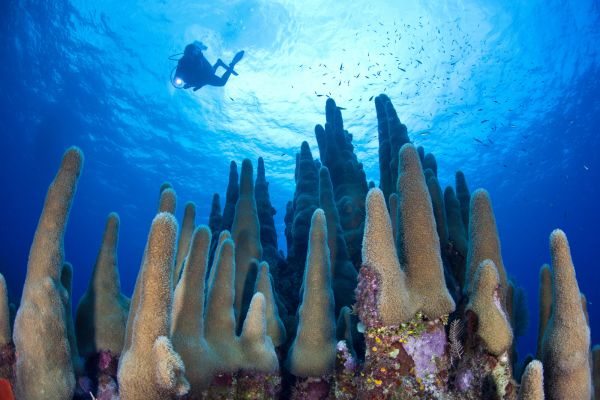

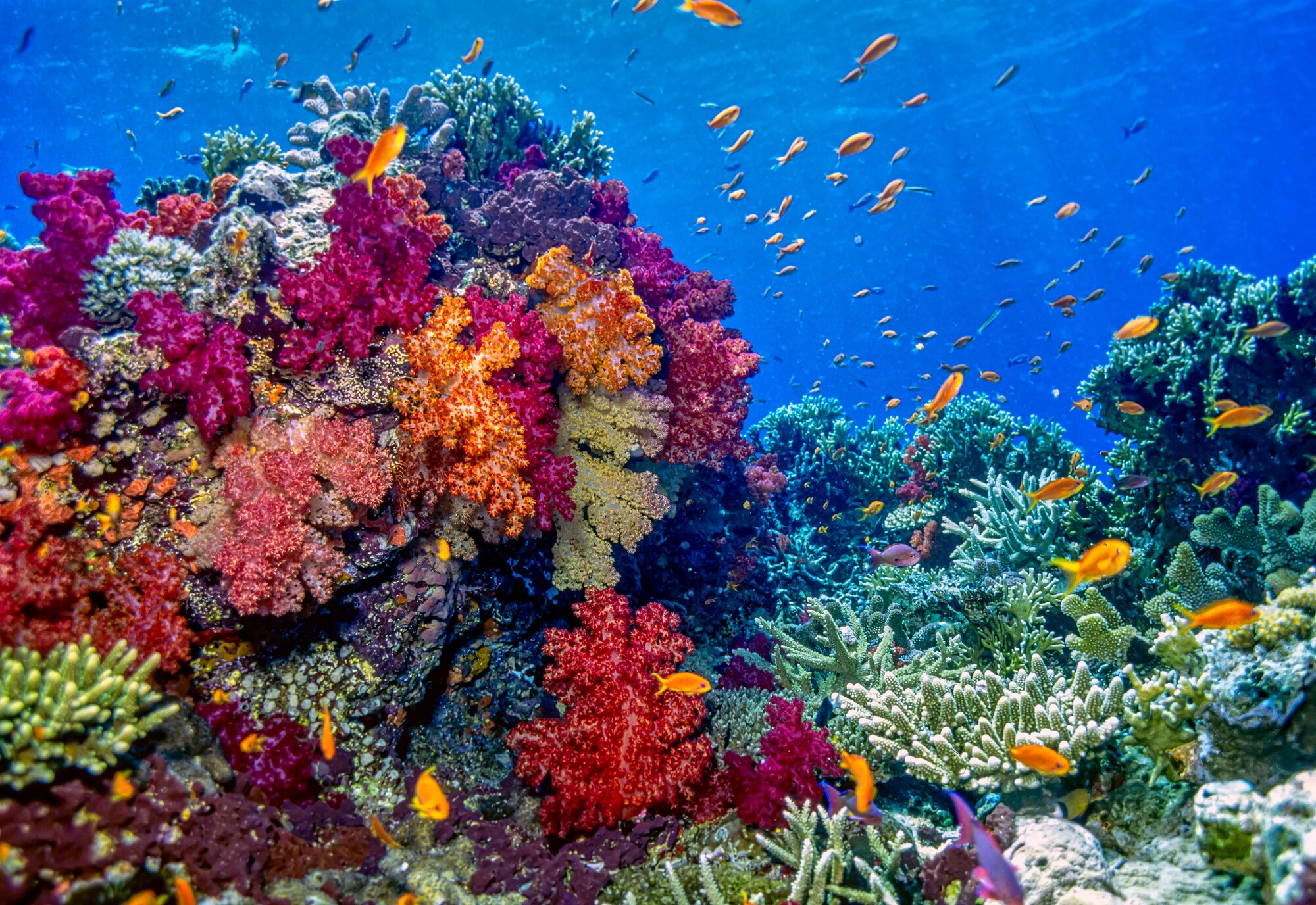
Fiji earned the nickname “soft coral capital of the world” for a reason you can see in a single glance: whole walls and pinnacles glowing in pinks, purples, oranges and white, each colony puffed up like a bush in bloom. But those colours are not a fixed backdrop. They switch on and off with the tide. Understand why, and you can plan a Fiji trip around the soft corals instead of hoping you get lucky.
- The big idea: soft corals feed on plankton carried past them, so the best colour is where and when water is moving.
- Where: Rainbow Reef and the Somosomo Strait (Taveuni), Namena Marine Reserve, Bligh Water, Beqa Lagoon.
- Water temperature: roughly 24 to 30 C (75 to 86 F) across the year, depending on season and source.
- Visibility: about 20 to 40 m (65 to 130 ft) May to October; about 15 to 25 m (50 to 80 ft) November to April.
- Experience level: many of the best soft coral sites involve current. Beginners have options, but plan for guided drift diving.
Why soft corals love Fiji’s currents
Soft corals, sea fans and gorgonians belong to a group called octocorals. The name comes from the polyp, which always has eight tentacles; the stony corals that build reefs have tentacles in multiples of six, according to the eAtlas soft coral guide. Most soft corals have no hard outer skeleton at all. Instead they are supported by tiny calcium sclerites embedded in their tissue, which is why many look limp and deflated when the water is still.
Many warm-water species host symbiotic algae and live partly on sunlight, which gives them beige and brown tones. The showstoppers are different. Genera such as Dendronephthya carry no algae and rely on catching suspended plankton drifting past, so they thrive where flow is strongest. Those heterotrophic colonies are the bright yellow, orange, red, pink, purple and snow-white ones you photograph. In short, strong current means food, and food means colour.
Fiji’s geography delivers exactly that. The Somosomo Strait, a narrow shallow channel between Taveuni and Vanua Levu, is said to see nutrient-rich water well up when the tide turns, according to Fiji’s tourism authority. One Taveuni trip report says the name translates as “good water”, and it is easy to see why.
The tide is your dive planner
Because the colour depends on moving water, timing matters in two opposite ways. You want enough flow to inflate the corals, but you want it gentle enough to dive safely. At the Great White Wall on Rainbow Reef, that balance is the whole story.
Fiji’s tourism site says the Wall is best seen and accessed at slack low tide, and that its depth and current make it better suited to experienced divers. A Dive Photo Guide trip report says the dive is possible only at slack tide twice a day, while a ScubaDiving magazine report calls low slack the ideal window and notes the Wall is not diveable every day. The sources differ slightly, so treat them as a pattern, not a rule: the dive depends on the day’s tide, and your resort’s dive team will tell you which day and time work.
The same report describes entering through a tunnel that exits at about 21 m (70 ft) onto a wall dropping beyond 61 m (200 ft), with the best colour at roughly 27 to 30 m (90 to 100 ft). Fiji tourism gives a wider range for the site, 15 to 65 m (49 to 213 ft). Either way, this is deep, so your gas planning matters. Our guide to gas management and our article on the safety stop are worth rereading before you go.
Four regions, four personalities
“Fiji” is not one dive. Each region delivers soft coral in a different way, so choose by what you want from the trip.
| Region | Soft coral style | Getting there | Good for |
|---|---|---|---|
| Taveuni (Rainbow Reef, Somosomo Strait) | Walls, pinnacles and tunnels packed with colour; strong tidal flow | About 70 minutes by 19-seat plane from Nadi, then a short boat ride | Wide-angle photographers, confident divers |
| Namena Marine Reserve | Pinnacles and channels, with mantas and schooling fish alongside | Liveaboard, or day trips from a resort on Vanua Levu | Big-picture reef life |
| Bligh Water | Drifts and pinnacles; named sites include Instant Replay and Mount Mutiny | Resorts on the north coast of Viti Levu | Drift divers, shorter trips |
| Beqa Lagoon | Fewer soft corals than Bligh Water, but sea fans and a soft coral swim-through at Golden Arch | Near Pacific Harbour on the south coast of Viti Levu | Mixed trips with shark dives and a wreck |
Sources: Fiji tourism, Dive Photo Guide, Reefscape Travel and Scuba Diver Life’s earlier site list. Our Fiji’s Top Five Soft Coral Hotspots covers individual sites in more detail.
Taveuni and the Somosomo Strait
If soft coral is the point of your trip, Taveuni is the headline act. Dive Photo Guide’s account puts the Rainbow Reef transit at 20 to 30 minutes from the south of the island, and a ScubaDiving report describes around 25 sites within 20 minutes of one operator’s dock. That means short boat rides and plenty of choice, and the reports name sites like Yellow Fin Wall, Purple Wall, Rainbow’s End, Annie’s Bommie and Jerry’s Jelly.
Not every site is a deep one. The same ScubaDiving report places Jerry’s Jelly’s top at about 7.6 m (25 ft) with leaf scorpionfish between 7.6 and 10.7 m (25 to 35 ft), a reminder that shallower, gentler dives suit newer divers and photographers wanting longer bottom time. Save the Great White Wall for when you have the dives, depth and experience to enjoy it.
Namena: colour with community protection
Namena Marine Reserve sits south of Vanua Levu in Kubulau District. The Wildlife Conservation Society says it was established in 1997, covers about 60 square km (23 sq mi) and is the largest no-take reserve in Fiji, built around a horseshoe-shaped barrier reef and Namenalala island. The Kubulau communities own the traditional fishing grounds, and the reserve is managed jointly by their resource management committee and dive operators.
Visitors pay a dive tag fee. WCS says a voluntary tag was introduced in 2004 and that the money supports student scholarships and fish warden training; another guide says the fee also helps cover patrols, fuel and mooring maintenance. None of the pages we read gave the current price, so confirm it with your operator. Named sites include North Save a Tack and Chimneys, and Scuba Diver Life’s older guide describes Keenan’s as a narrow pinnacle covered in soft coral.
Bligh Water: drifts and pinnacles
Off the north of Viti Levu, Bligh Water is the easiest soft coral destination to reach from the main airport, and drift diving is the signature. Dive Photo Guide lists sites including Mount Mutiny, Purple Haze, Vatu Express, Maytag, G6, Instant Replay, Mellow Yellow and Garden of Eden. It also notes that soft corals need current to inflate, so dive operators assess the water on the day. If you have never done a proper drift, our Cozumel drift diving guide covers the basics.
The nearby Vatu-i-Ra Conservation Park, established in 2017, covers about 110 sq km (42 sq mi). The Dive Photo Guide report quotes an annual fee of FJ$15 (roughly US$7), so keep a little cash handy.
When to go
| Season | Water temp | Visibility | Suit |
|---|---|---|---|
| Dry (May to Oct) | About 25 to 30 C (77 to 86 F) | 20 to 40 m (65 to 130 ft) | 3 mm or shorty |
| Wet (Nov to Apr) | About 24 to 27 C (75 to 81 F) | 15 to 25 m (50 to 80 ft) | 3 to 5 mm |
Ranges combine Fiji tourism and Liveaboard.com figures, which differ slightly; seasonal numbers are guides, not guarantees.
The dry season gives the clearest water, which suits wide-angle photography. The wet season is warmer and quieter, with plankton-rich water that can lower visibility but also feeds the corals, and the heaviest rain tends to fall January to March. Neither season is wrong; you are choosing between clarity and crowds.
Diving and shooting soft coral without harming it
- Stay off the wall. Soft corals are delicate and a fin kick can tear a colony. Our buoyancy tips help you hold position in flow.
- Use a reef hook or a muck stick only where your guide approves it, and only on dead rock or sand. Dive Photo Guide mentions a muck stick for holding position; ask before you use one.
- Go wide. A wide-angle or fisheye lens suits big colourful scenes. See our wide-angle photography for beginners article.
- Use mooring buoys. At Namena, the rules call for buoys where available and anchoring only on sand.
- Touch nothing and feed nothing. This is the rule in the Namena reserve and a sound habit anywhere.
Frequently asked questions
Are soft corals plants?
No. They are animals. Each colony is made of many small polyps with eight tentacles, and many species also host algae that supply extra energy.
Why do the colours disappear on some dives?
Soft corals deflate when current drops, and the colour of many species fades with them. Dive at a different tide stage and the same wall looks quite different.
Can beginners dive Fiji’s soft coral sites?
Yes, in the right places. Shallower reefs and gentler sites exist in every region. The Great White Wall, though, is described by Fiji tourism as better suited to experienced divers.
Which month is best?
May to October gives the clearest water, according to Fiji tourism, while November to April is warmer. Manta rays have been reported at Taveuni from March to September.
Can I fly right after diving?
Fiji tourism’s page cites dive networks suggesting 18 to 24 hours after multiple dives. Follow your own training agency’s or dive computer’s guidance, and plan a buffer before flights home.
Sources: Tourism Fiji, best time to dive; Tourism Fiji, Somosomo Strait; Wildlife Conservation Society Fiji, Namena Marine Reserve; eAtlas, soft corals; Dive Photo Guide, Fiji tour; ScubaDiving, Bula to the Rainbow; Liveaboard.com, best time to dive Fiji; Dive the World, Namena.