
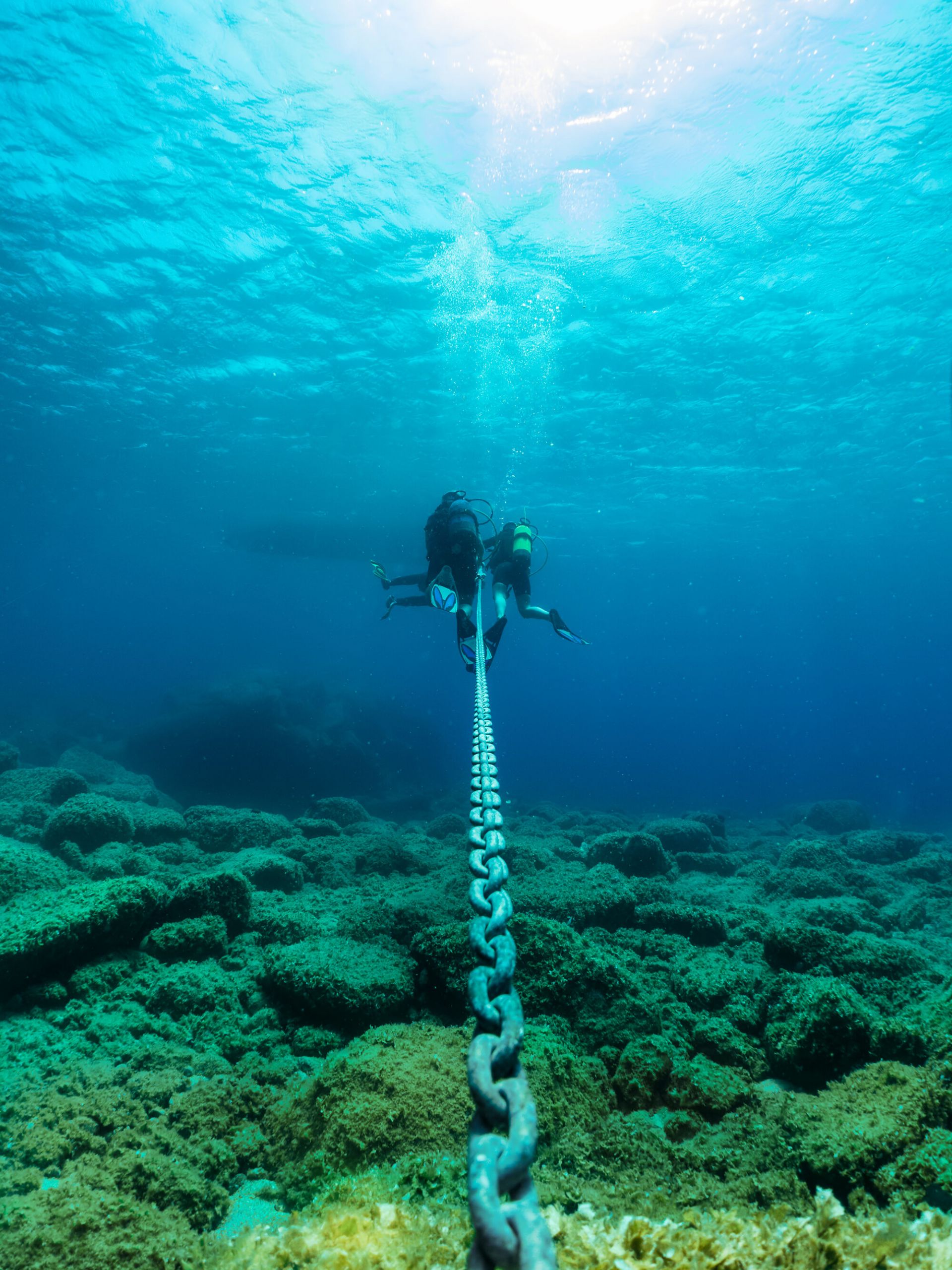
The safety stop is the quietest ritual in recreational diving: three minutes hanging at 5 metres (15 feet) at the end of a dive, with nothing much to see and a computer counting down. It is easy to skip when the cylinder gauge is low or the boat is waiting, and just as easy to do badly. Here is what the stop is for, what the research and training agencies actually say, how to hold your depth, and what to do when you cannot complete one.
At a glance
- The standard: three minutes at 5 m / 15 ft before surfacing, per the PADI history of the stop.
- Why: a slow, shallow pause lets absorbed nitrogen leave the body more gradually, and research found fewer bubbles in the bloodstream of divers who stopped.
- Required or recommended? For a no-decompression recreational dive it is a recommended habit, not a mandatory stop. A decompression stop shown by your computer is different and is not optional.
- Deep stops are a separate, still-debated practice and not part of basic recreational training.
- Not a guarantee. A stop reduces stress; it does not make a risky profile safe.
What a safety stop actually is
A safety stop is a planned pause during the last part of an ascent, normally at 5 m / 15 ft for three minutes. It is not the same as a decompression stop, which is an obligation created by the dive itself. Our primer on decompression diving describes how, on a no-stop recreational dive, divers ascend directly to the surface except for the safety stop, whereas decompression dives deliberately exceed no-stop limits and require planned pauses.
The PADI blog’s history says divers are generally advised to pause at 5 m / 15 ft for three minutes, letting the body release absorbed nitrogen gradually and giving you a moment to check for obstacles on the way up.
Why it helps: the evidence in plain language
When you breathe compressed gas at depth, your tissues absorb extra nitrogen. On the way up the surrounding pressure falls, and if it falls too fast, some of that gas can form bubbles. The safety stop slows the final, fastest part of the pressure change. Neal Pollock of Divers Alert Network wrote in Alert Diver that the shallowest zone has a high relative rate of pressure change, which makes it critical to decompression stress. He called the safety stop the most significant evolution in decompression safety for recreational diving in the past 30 years.
The research story goes back decades. According to PADI’s history, Andrew Pilmanis studied ascent rates and bubble formation in 1974. In 1994 graduate student Donna Uguccioni wrote a master’s thesis that built on his work; Doppler tests found divers who did safety stops had less bubble formation in their bloodstream than those who did not. PADI’s Recreational Dive Planner introduced safety stops to a wider audience in 1988, and over the 2000s stops became widely accepted, with computers beginning to remind divers to make them.
A caution on what the evidence means: an Alert Diver article on stopping notes that Doppler-detected bubbles correlate with decompression sickness (DCS) but not strongly, and that the Haldane-style models underlying current computers predict minimal benefit from safety stops. Bubble counts are a clue, not a verdict, so see the stop as a sensible margin, not a magic switch. Questions about your own risk belong with a dive physician.
Required or recommended?
Practice differs between agencies and between countries, so check your own training. What the sources we read say:
| Source | What it says about the stop |
|---|---|
| PADI (blog history) | Divers generally advised to stop at 5 m / 15 ft for three minutes; the stop appeared in the 1984 Open Water Manual and the 1988 Recreational Dive Planner. |
| BSAC (safe diving guide) | Recommends a stop of at least one minute at around 6 m (20 ft) if safe to do so; longer is better, stops are optional, and it may be sensible to skip one if you are low on gas or sea conditions make depth control difficult. Ascend slowly from 6 m, taking at least one minute. |
| Dive Training magazine | Should be standard on dives deeper than 10 m / 33 ft, typically 3 to 5 minutes at 5 to 6 m / 15 to 20 ft. |
| DAN (Pollock) | Three minutes is good, but extending it as gas and conditions allow is better. |
| NAUI | A 2019 NAUI-published paper concludes both deep and shallow stops are safely used in recreational and technical diving. |
We could not verify SSI’s wording on a page we read, so check your SSI materials or instructor. In short, three minutes at 5 m is the usual recommendation, and none of these equals the mandatory stop a computer shows on a decompression dive.

Safety stops versus deep stops
A deep stop is an extra, brief pause at roughly half your maximum depth. Marine scientist Richard Pyle began making them in the mid-1990s, according to DAN’s Petar Denoble, and the practice spread before it was tested scientifically. Dive Training magazine reported a DAN comparison in which a deep stop plus a shallow stop gave the lowest bubble grades. The best combination was a 10 m / 30 ft per minute ascent, a 2.5 minute stop at half the dive depth and a 3 to 5 minute stop at 5 m / 15 ft. For a 30 m / 100 ft dive, that means 2.5 minutes at about 15 m / 50 ft.
However, when Denoble asked experts in Alert Diver whether recreational no-decompression divers should add deep stops, the answers were cautious. Several said no: data were insufficient to justify them, and the shallow safety stop and a controlled ascent remain the standard. One expert said concern about deep stops was no greater than for the accepted shallow stop. A U.S. Navy Experimental Diving Unit trial of nearly 400 air dives to 170 fsw found more DCS in the deep-stops group. In practice, the sensible message for recreational divers is this: do the safety stop, follow your computer, and do not improvise extra stops that your training and equipment do not account for.
How to hold depth at 5 m
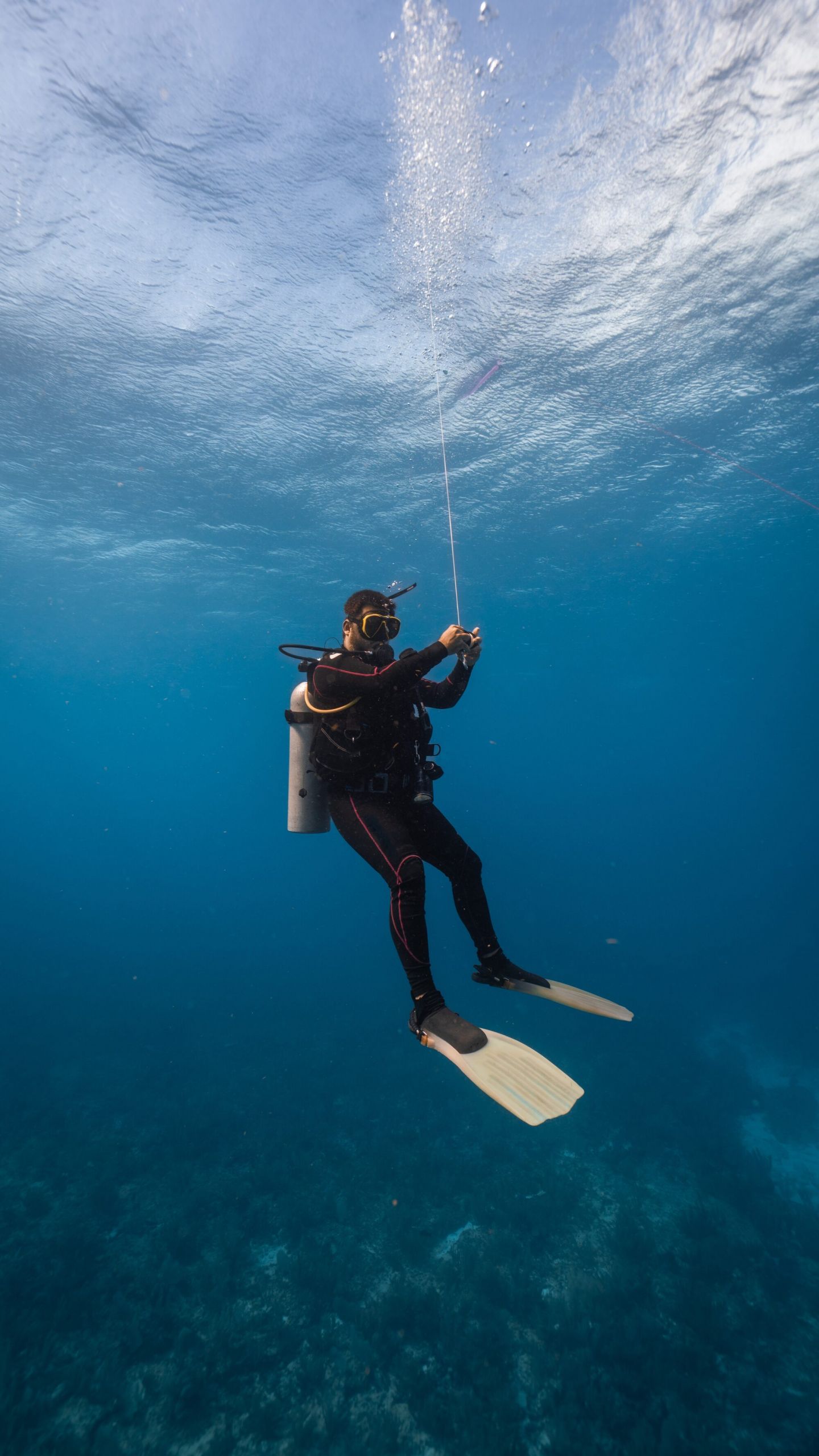
A stop is only useful if you are actually at the right depth, and shallow water is where buoyancy is most unstable. Divernet’s Top 10 Safety Stop Tips notes that you are most buoyant in shallow water, where gas expansion changes buoyancy the most. Dive Training magazine adds that at this depth, small changes in lung volume can cause unnoticed upward drift, and expanding air in the BC makes it worse.
- Arrive neutral. Start venting your BC as you approach 6 to 7 m rather than at the stop.
- Use your lungs. Make small changes in breath depth to fine-tune your position.
- Keep a hand on the deflate button to prevent a runaway ascent, as Divernet advises.
- Stay horizontal. Divernet notes that being fully horizontal means your whole body decompresses at the same depth.
- Use a reference. A line or computer works, but Dive Training warns that hang lines can mislead in current or when a boat swings.
For more on weighting, trim and breath control, see our ten tips for better buoyancy control, which suggests being only slightly negatively buoyant at your three-minute stop when correctly weighted.
Plan the gas for the stop
Divernet recommends including the stop in your gas plan and ending dives with about 50 bar (725 psi) as an emergency margin. As an illustration with assumed numbers: at 5 m ambient pressure is about 1.5 bar, so a diver breathing 15 litres per minute at the surface (0.53 cubic feet) uses about 22.5 litres per minute at the stop. Three minutes is roughly 68 litres, under 6 bar (around 80 psi) from a 12-litre cylinder. Your own breathing rate may differ considerably.
Do not skip the plan, and do not stay at risk
The stop is a recommended safety margin, not a reason to stay in the water when something is wrong. BSAC says it may be sensible to skip one when you are low on gas or sea conditions make depth control difficult. If you are in an out-of-air or emergency situation, follow your training and your buddy procedures; this article is general education, not personal medical or dive-planning advice.
What if you cannot do the stop?
Low gas, rough water and strong current are the usual reasons. DAN’s Pollock calls using some reserve gas to extend a stop “probably a high-benefit compromise”, which is why a reserve matters. If you truly cannot make the stop, ascend slowly and consider how you might be conservative on the following dives, such as a longer surface interval and shallower profile. Pollock recommends moderating dive profiles after short surface intervals.
A missed decompression stop is a different matter. BSAC’s guidance says if decompression stops are missed, you should not re-descend and should call emergency services immediately. If you ever see “decompression” or similar warnings on your computer, it is a signal to follow your training and the computer’s instructions, and to seek professional help promptly if you have symptoms.
What your computer will do
PADI’s history notes that computers began reminding divers to make safety stops in the 2000s. Prompts and countdowns differ between brands, so read your manual and learn what yours shows before you rely on it.
Common mistakes and fixes
| Mistake | Fix |
|---|---|
| Rushing the last few metres after the stop | Dive Training says divers often focus on the stop but ascend too fast in the final yards; vent remaining BC air and keep ascending slowly. |
| Drifting upward as air expands | Vent early, keep a hand on the deflate button. |
| Gripping a boat line tightly | Divernet advises letting go if it pulls hard and checking the rope first. |
| Practising demanding drills at the stop | Divernet warns demanding drills can cause panic; refine trim instead. |
| Surfacing under a boat or into traffic | Look and listen during the ascent and use a surface marker buoy. |
Safety stop checklist

- Include the stop in your dive plan and gas plan before you enter the water.
- Agree hand signals with your buddy: stop, minutes remaining, all clear.
- Ascend at the rate your computer shows, and begin venting before the stop.
- Hold 5 m / 15 ft (or the depth your computer shows) for at least three minutes; extend if gas and conditions allow.
- Stay horizontal and keep a hand near the deflate valve.
- Look around, listen for boats, deploy a surface marker if appropriate.
- After the all clear, ascend slowly, exhaling and venting as you rise.
Frequently asked questions
Is the safety stop mandatory?
For no-decompression dives it is a recommended practice, though some courses and operators require it. BSAC treats it as optional and sometimes sensible to skip, and PADI describes it as general advice. A computer-displayed decompression stop is not optional.
Is 15 feet or 20 feet better?
Sources vary: PADI says 5 m / 15 ft, BSAC says around 6 m, and Dive Training gives 5 to 6 m / 15 to 20 ft. Follow your training and computer.
Can I do my safety stop longer than three minutes?
Yes. DAN’s Pollock describes extending the stop as a conservative choice, as long as gas and conditions allow.
Do I need deep stops as a recreational diver?
The experts surveyed in Alert Diver did not recommend arbitrary deep stops for recreational no-decompression dives. Before changing your habits, talk to your instructor.
For another take on diving fears and facts, see our top 10 diving myths.
Sources: PADI Blog, History of the Safety Stop; BSAC Safe Diving Guide; DAN, Defensive Dive Profile Planning; DAN, Deep Stops; Divernet, Top 10 Safety Stop Tips; Dive Training, A Safe Habit; NAUI, Deep Stops and Shallow Stops; Alert Diver Europe, To Stop or Not to Stop.