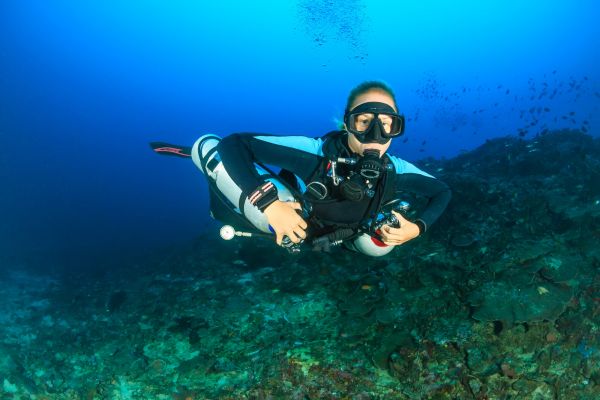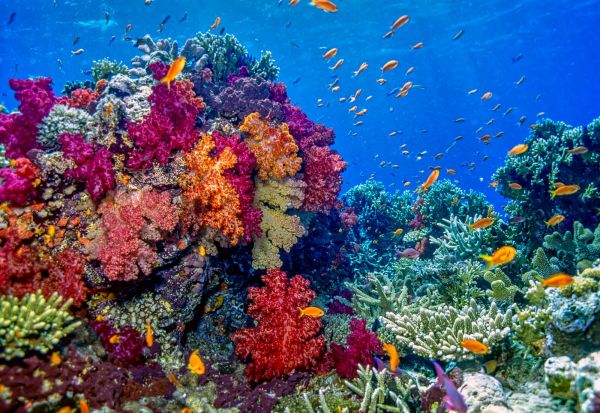
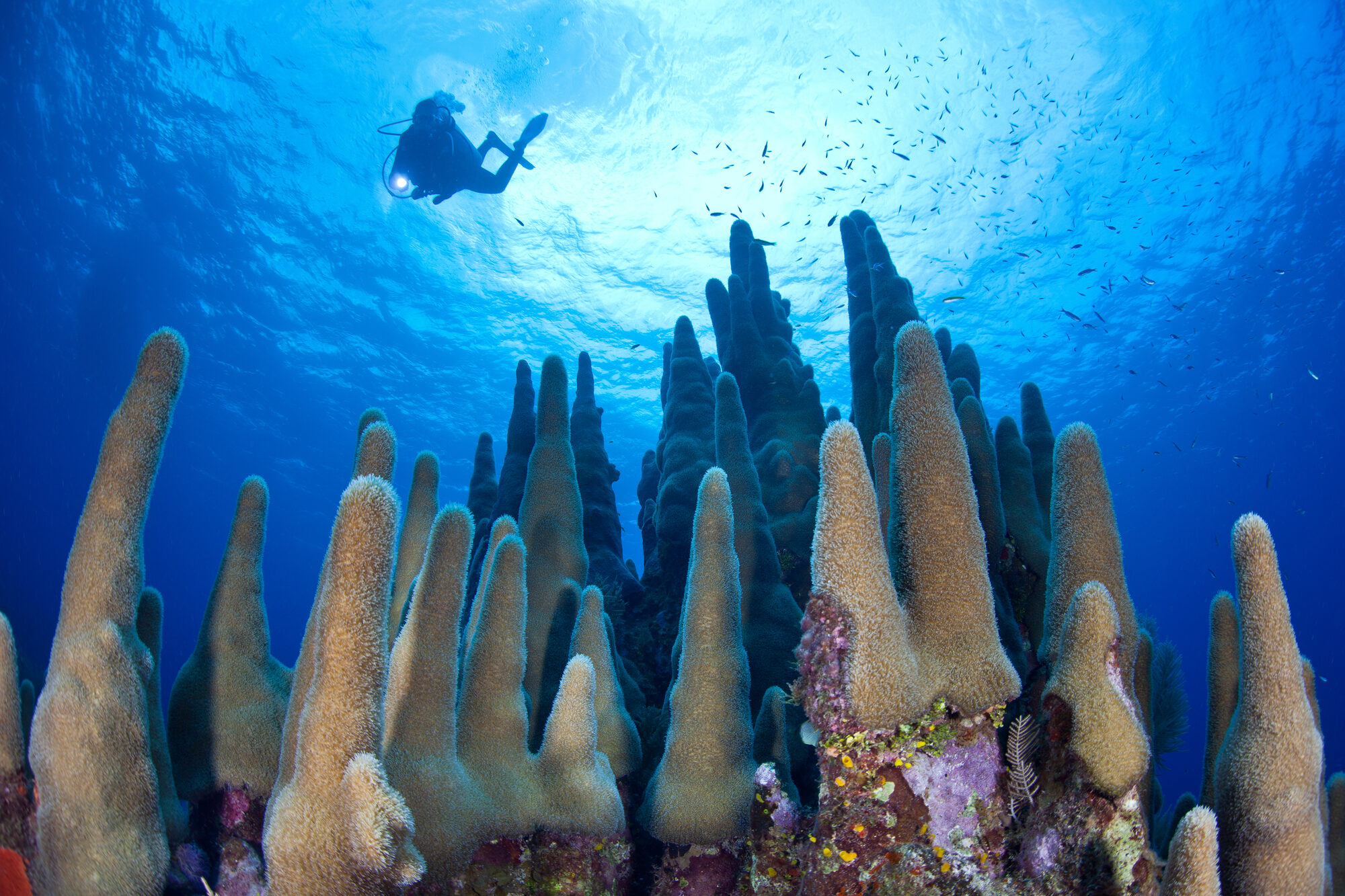
Cozumel is the kind of dive destination where the ocean does the work. Instead of finning against a current, you relax, hang in the water and let a warm Caribbean flow carry you along a wall of sponges and coral while the boat follows your bubbles. It is relaxing, it is addictive, and it asks for a few specific skills.
At a glance
- Style: drift diving from boats, usually two-tank trips.
- Water temperature: about 25 to 29 °C (77 to 84 °F) depending on the source and month.
- Visibility: often more than 30 m (100 ft).
- Typical depths: many popular sites sit between 12 and 25 m (40 and 80 ft).
- Best months: November to May for the mix of weather and marine life, according to Dive In and SSI.
- Hurricane season: runs into November; sources vary on dates.
- Rules: no gloves or knives, and only biodegradable sunscreen in the marine park.
Why Cozumel is a drift destination
Cozumel sits just off the Yucatan coast on the Mesoamerican Barrier Reef, described by PADI as the world’s second-largest barrier reef, behind the Great Barrier Reef. Dive In explains that the North Equatorial Current flows along the island’s west coast and carries divers over the reef. The same current helps keep the reefs clean and alive.
The result is a destination where current is part of the plan. Writing for Scuba Diving magazine, one visitor describes first-day drift dives at Santa Rosa Wall, Yucab, Cedral and San Francisco Wall. X-Ray Mag goes further and says all dives are drift dives, with the boat following the divers’ bubbles and the guide’s surface marker buoy and collecting you wherever you surface.
Strength varies. PADI’s Cozumel page calls the diving known for easy drifts, but says current can be strong during seasonal transitions, which suits advanced divers. Dive In says summer currents are sometimes stronger. SSI notes that northern waters tend to have stronger flow. PADI’s blog says the east and south sides can have heavy currents, while most sites suit all levels comfortable with drifting.
The sites you will hear about
Different sources give slightly different depth ranges, so use these as planning figures and let your guide’s briefing be the final word.
Palancar. PADI’s blog describes Palancar Reefs as four sections (caves, bricks, horseshoe and gardens), with something for every level. SSI puts Palancar Gardens at roughly 12 to 25 m (40 to 80 ft) with gentle current. Dive In describes the Horseshoe at 12 to 24 m (40 to 80 ft) and Palancar Caves at about 18 m (60 ft) with swim-throughs and arches, while the Scuba Diving writer found Palancar Garden had no current at all on that trip.
Santa Rosa Wall. Dive In gives 21 to 24 m (70 to 80 ft) and a fast current, while SSI says the reef edge starts around 15 m (50 ft) before dropping into deep water. PADI’s blog calls it a popular drift dive for intermediate divers.
Colombia. SSI lists Colombia Reef at 15 to 25 m (50 to 82 ft) with stronger current, and Colombia Shallows at 5 to 9 m (15 to 30 ft) with calm water for newer divers. Dive In describes a Colombia Wall from 15 to 30 m (50 to 100 ft) with caves, overhangs and tunnels.
Others. Dive In lists Tormentos Reef (12 to 18 m), Punta Tunich (about 20 m, known for strong current), and the C-53 Felipe Xicotencatl wreck, a 154-foot (47 m) former minesweeper sunk as an artificial reef in 1992, at 15 to 24 m (50 to 80 ft). Paradise Reef is shallow, at 9 to 12 m, which makes it popular for check-out dives and night dives.
| Site | Depth | Current and level (as reported) | Look for |
|---|---|---|---|
| Palancar Gardens | 12 to 25 m / 40 to 80 ft | Gentle; newer divers (SSI) | Angelfish, parrotfish, turtles |
| Palancar Caves | about 18 m / 60 ft | Varies with conditions | Swim-throughs, arches |
| Santa Rosa Wall | 21 to 24 m / 70 to 80 ft | Fast; intermediate or experienced | Sponges, overhangs, turtles |
| Colombia Reef | 15 to 25 m / 50 to 82 ft | Stronger; intermediate (SSI) | Eagle rays, turtles |
| Paradise Reef | 9 to 12 m / 30 to 40 ft | Gentle; check-out and night dives | Octopus, crabs at night |
Depths, visibility and water temperature
Water clarity is a major draw. Dive In reports visibility over 100 ft (30 m) on every dive during a February visit, with water at 28 °C (82 °F), and SSI also says visibility often exceeds 30 m. The Scuba Diving writer found bottom depths of about 18 to 21 m (60 to 70 ft) on their trip. PADI gives 25 to 28 °C (78 to 82 °F) year-round, cooling slightly from September through December, while SSI gives 26 to 29 °C (79 to 84 °F).
Another source, Mexico Travel and Leisure, gives monthly visibility ranges: 25 to 40 m from November to April, 20 to 28 m in May and June, 15 to 22 m in July and August, and 15 to 25 m in September and October. Treat these as one outlook rather than a guarantee. Most divers on Dive In’s trip wore 3 to 5 mm wetsuits.

What you will see
Dive In lists turtles, nurse sharks and rays as frequent sightings, with eagle rays common in winter and early spring. At Casa Blanca it mentions hawksbill, green and loggerhead turtles, southern stingrays and moray eels. PADI reports bull sharks, mainly November to March. PADI’s blog mentions manta rays at Palancar, though other sources we read did not.
The endemic splendid toadfish is the local celebrity. Ramsar’s site description for the national park lists loggerhead, hawksbill and green turtles, queen triggerfish, the splendid toadfish, and cat, tiger and blacktip sharks, plus the southern stingray.
When to go, and hurricane season
Dive In says diving is possible year-round, with the best mix of weather and marine life from November to May. SSI agrees on November to May and notes occasional winter north winds that can affect boat departures. PADI says roughly 300 diving days a year are possible. PADI’s blog also points to December to April as clearer, slightly cooler and busier, and May to October as quieter and slightly warmer.
On storms, sources differ. Dive In puts hurricane season from June through November. PADI’s blog says May to October. Mexico Travel and Leisure says the season officially ends 30 November, with September the peak risk and risk dropping sharply after mid-October. Since your trip falls near the shoulder, buy travel insurance that covers weather disruption and keep a spare day in your plan.
Skills you need for drift diving
- Buoyancy. Neutral buoyancy matters most on walls. Our ten tips for better buoyancy control will help.
- Staying with the group. Because the boat follows the guide’s marker buoy, drifting apart makes pickup harder. Keep your buddy and guide in view.
- Surface marker buoy. The guide carries one for the boat to follow, but ask your operator whether you are also expected to carry your own.
- Calm entry on a mooring line. Dive In advises dropping down the mooring line on the C-53 wreck to avoid current.
- Know your limits. Dive In says Barracuda Reef and Devil’s Throat are for advanced divers, and Aerolito de Paraiso is for cavern- or cave-trained divers only.
If drifting is new to you, our diving myths article is a reminder that you do not need to be an expert, and an earlier Scuba Diver Life Cozumel video shows the island’s corals and drifts.
Trip planning tip
Ask for a current briefing every morning. Conditions change from day to day and site to site, and your guide may reorder the day to match the flow. Add a buffer day, as the Scuba Diving writer suggests, because weather apps can overpredict rain.
Boats, logistics and getting there
Dive In says most diving is on two-tank boat trips, and shops typically collect divers from their hotel pier in the morning. Some resorts offer shore diving. The Scuba Diving writer says most sites are within a 25-minute boat ride. You can fly direct to Cozumel (CZM) or fly to Cancun (CUN), take a 1 to 2 hour road transfer to Playa del Carmen, and then a ferry of about 40 minutes.

Marine park rules, fees and sunscreen
Most of the dive sites lie within Cozumel Reefs National Park. Ramsar records the Ramsar site at 11,987 hectares (about 29,600 acres), designated 2 February 2005, and says more than 1,500 divers visit daily, a pressure point for the reef. A management plan since 1998 regulates diving, fishing and navigation.
X-Ray Mag lists these prohibitions: standing on or touching coral, fishing or collecting, gloves or knives, feeding fish, dumping waste or fuel, and sunblock that is not biodegradable. It gave a daily entry fee of US$4.50 at the time of writing, so confirm the current amount with your operator. Cozumel4You adds that dive professionals can register to carry them. For sunscreen, it suggests skipping it before swimming, wearing a UPF rashguard instead, and applying a biodegradable product only on land. The same site reports that Paradise Reef and Paradise Bajo rest in June and July, under a CONANP system, as of 2020. Check it still applies.
Frequently asked questions
Is Cozumel good for new divers? Many sites suit newer divers, such as Palancar Gardens and Colombia Shallows according to SSI, but stronger currents mean you should tell your guide your experience.
How do I get to the dive boat? Dive In says shops typically pick divers up from the hotel pier in the morning.
Can I dive in September? Yes, but Mexico Travel and Leisure rates September as peak hurricane risk.
Will I see sharks? Bull sharks are reported mainly from November to March, and nurse sharks are seen often.
Sources: Dive In; Ramsar Sites Information Service; SSI; PADI; PADI Blog; Scuba Diving; X-Ray Mag; Cozumel4You; Mexico Travel and Leisure.