
Every year, British divers do something unglamorous and quietly brilliant: they write down what went wrong. BSAC, the British Sub-Aqua Club, has gathered those accounts since 1965, and on Monday 2 November 2026 it will present the findings from 2025 in a free online webinar. The numbers are British, but the lessons travel well, because a stuck inflator, a drifting buddy or a drysuit full of air in the legs behaves the same way in Cornwall, Cozumel or the Red Sea.
- The news: BSAC will present its 2025 diving incident report in a free webinar on Monday 2 November 2026 at 7pm UK time, led by Safety and Development Officer Jim Watson.
- The latest published data (2024): 331 incidents in total, 239 of them in the UK, including 12 fatalities. The average age of those who died was 57.4.
- Recurring themes: solo diving and separation, air trapped in drysuit feet, immersion pulmonary oedema, repeat diving and unconventional kit.
- Your move: use the checklist below, and report your own incidents or near misses, however small.
Why incident reports are worth reading
Most of us learn from our own mistakes and from the stories told at the dive-centre bar. Incident reports widen that pool enormously. BSAC says it draws its picture from reports made by individual divers, plus data from the Maritime and Coastguard Agency, the RNLI, the Health and Safety Executive and DDRC Healthcare, which runs a diving and hyperbaric medical emergency service. The 2025 report covers UK incidents between 1 January and 31 December 2025, involves divers from every agency, and also includes BSAC members who dive abroad.
One caution before we dig in. Incident numbers are not accident rates. BSAC itself notes that the counts track how much diving is going on, which has returned to pre-pandemic levels. A busy year produces more reports. What matters is the pattern inside the numbers, and that is what the rest of this article is about. The 2025 findings have not been published yet, so everything below uses the 2024 report, the most recent full dataset.
The 2024 figures in brief
| Measure | 2024 report |
|---|---|
| Incidents recorded (UK and overseas) | 331, of which 92 happened overseas |
| UK incidents | 239 (242 in 2023) |
| UK fatalities | 12 (9 in 2023) |
| Average age of those who died | 57.4 years |
| Fatalities involving solo diving or separation | Half (six of twelve) |
| Decompression illness cases | 37, against a 2019-2023 average of 46 |
| Immersion pulmonary oedema (IPO) | 7 confirmed, 1 possible, none fatal |
| Lifeboat and helicopter call-outs | 29 lifeboat, 25 helicopter |
It is not all grim reading. Decompression illness and rapid-ascent incidents continued to fall, with fewer cases tied to dives deeper than 30 m (98 ft), fast ascents or missed decompression stops. Reports of diving incidents beginning at the surface also kept declining, and the early-season spike that once appeared each spring has gone. Good training and better habits are visibly working.
Theme one: solo diving and separation
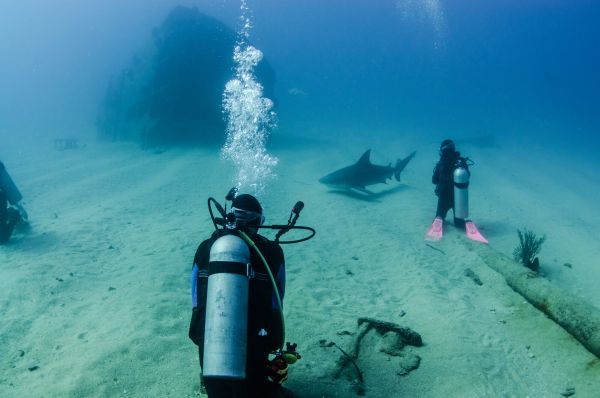
Six of the twelve UK deaths in 2024 involved a diver who was alone or who lost contact with their buddy. The report’s advice is blunt: do not dive alone, and keep track of your buddy for the whole dive. That sounds obvious, yet separation usually happens quietly, in poor visibility, in a current, or when one person gets absorbed in photography or a fish.
A simple fix: agree a lost-buddy plan at the briefing, including how long you will search before ascending, and make sure both of you know it. Check your buddy’s position every time you check your own gauge. If your gauge check and buddy check become one habit, separation has far less room to develop.
Theme two: air in the drysuit feet
Over two years the report counted 18 cases in which divers lost control of their buoyancy because air migrated to the feet of their drysuits. Some ascended feet first, and some aborted the dive; in certain cases the air displaced fins and drysuit boots. BSAC’s recommendation is to complete proper drysuit training and to make sure the suit, boots and fins fit well around the legs and feet.
If you dive dry, or plan to, here is how to reduce the risk:
- Take a drysuit course rather than learning on a trip. Recovering from an inverted ascent is a skill to practise in a controlled setting.
- Check the fit. Loose boots, a baggy leg or strap-free fins allow air to travel and fins to slip.
- Use minimal air in the suit and manage it with small, frequent adjustments, using your BCD for the rest of your lift.
- Sort your trim in shallow water before the dive, and practise the correct recovery position.
- Check weighting. The report also links under- and overweighting to ascent problems.
Our guide to choosing between a jacket BCD and a backplate and wing is a useful companion if you are also rethinking your buoyancy set-up.
Theme three: immersion pulmonary oedema
Immersion pulmonary oedema, also called IPO, IPE or swimming-induced pulmonary oedema, is fluid building up in the lungs during immersion. The 2024 report logged seven confirmed cases and one possible case, none fatal. BSAC reads that as good news: more divers and doctors recognise the signs, so cases are caught earlier.
DAN describes the typical symptoms as shortness of breath, coughing (sometimes with blood-tinged sputum), extreme tiredness and a feeling of wet lungs. Cold water, overhydration, uncontrolled high blood pressure, hard exertion and breathing resistance can all contribute, though cases happen in warm water too, and DAN says there is currently no test to predict who is susceptible. The recommended response is to tell your buddy, make a controlled ascent, limit exertion once out, ask for oxygen and get medical evaluation. BSAC advises anyone who has had IPO to seek medical advice before diving again. This is general information, not medical advice, so talk to a diving doctor about your own situation.
The practical lesson: if breathing becomes unusually hard on a dive that feels easy, treat it as a reason to end the dive, not to push through it.
Theme four: repeat diving and decompression illness
Although overall DCI numbers are falling, the report notes that repeat diving is becoming a larger share of cases, and calls this avoidable. The usual suspects, deep dives, fast ascents and skipped stops, are fading. What remains is the more subtle risk of stacking dives day after day.
Sensible habits include: keep a conservative profile on the second and third dives of the day, let your computer’s no-stop time guide you rather than push it to zero, make a proper safety stop (see what a safety stop is and why to do it), stay hydrated, and plan surface intervals rather than squeezing in one more. Ask your instructor about how best to plan repeat days.
Theme five: experience does not protect you
One of the report’s most useful findings is an uncomfortable one. Dive Leaders and Advanced Divers are a minority of BSAC divers, yet they made up 47% of non-casualty incidents and 31.6% of casualties. The authors point out that these divers may simply dive more often, but their message is that nobody is immune and complacency is a risk at every level.
That fits the old pattern in many safety reviews: experienced divers skip the buddy check, trust a familiar site, or dive a tired body. The cure is to keep the routine of a beginner, with a proper pre-dive check, a planned turn pressure and a clear exit plan. Our article on gas management basics shows what that looks like in practice.
Theme six: unconventional kit
The report singles out battery-powered compressors on floats that supply a regulator through a 9 to 12 m (30 to 40 ft) hose, sold online. UK diving organisations and the British Diving Safety Group have raised serious concerns about them, even for shallow water, and one 2024 fatality involved this type of set-up. If it is not covered by a recognised training course and manufacturer-tested for diving, treat it with suspicion. Four of the twelve fatality narratives involve rebreathers, so if you dive one, the rigour of your checks matters even more.

Print or save this and run through it before every dive:
- Agree a plan and a lost-buddy procedure out loud.
- Check weighting at the start of the dive, with a near-empty tank if you can.
- Test inflators, dump valves and, if dry, drysuit valves and boots.
- Know your turn pressure and your minimum gas at the surface.
- Carry a surface marker buoy and know how to deploy it without a jammed reel.
- If you feel unwell, cold, anxious or tired, say so and call the dive.
Report it: even the small stuff
Reports only help if people file them. BSAC asks divers to report every incident or accident, not only serious ones, and says a short report is better than none. You can use its online form or email [email protected]. Reports are treated in strict confidence, and personal details are left out of the published annual report. In the United States and elsewhere, DAN runs a Diving Incident Reporting System that welcomes accounts from divers and witnesses, including near misses, and allows anonymous submissions. Near misses are the cheapest lessons there are.
If you want the headline findings for 2025 straight from the author, the webinar is free and open to everyone, whatever agency you trained with. Registration is through the Teams link on BSAC’s announcement page.
Frequently asked questions
Does the BSAC report cover only BSAC members?
No. The data covers incidents involving divers from all training agencies in UK waters, plus BSAC members diving abroad. Many reports come from individual divers, with others from the RNLI, the Coastguard and the Health and Safety Executive.
Are the numbers rising?
Not dramatically. The UK count was 239 in 2024 compared with 242 in 2023, though fatalities rose from nine to twelve. BSAC says incident numbers follow the amount of diving taking place.
What is the single most important takeaway?
Do not dive alone, and stay in contact with your buddy. Half of the UK fatalities in 2024 involved solo diving or separation.
Can I join the 2025 report webinar if I am not in the UK?
BSAC describes it as free and open to anyone, including divers trained by other agencies. It is online and starts at 7pm UK time on 2 November 2026.
Where do I report a near miss?
You can use BSAC’s online incident form, or DAN’s online Report an Incident form, which accepts anonymous submissions. Either way, include what happened, the conditions and what you would do differently.
Sources: BSAC, “Learning from every dive” (2025 report webinar); BSAC Annual Diving Incident Report 2024 (PDF); BSAC news release on the 2024 report; BSAC, reporting a diving incident; DAN, immersion pulmonary edema; DAN Diving Incident Reporting System; Divernet; DIVE Magazine; DeeperBlue.