
Your buoyancy control device is the piece of kit you touch on every single dive, and it is also the one that most shapes how you hang in the water. Jacket or backplate and wing? Both float you, both carry a cylinder, and both can last for years. The differences show up in trim, adjustability, packed weight and how much you enjoy wearing the thing. Here is how to choose.
At a glance
- Jacket BCD: an all-in-one garment. Air sits mainly around your back and sweeps forward under the arms, which helps at the surface. Familiar, easy to put on, usually with integrated weight pockets.
- Backplate and wing: a harness, a plate and a bladder behind you, built as separate parts. Streamlined, modular and often lighter, but more of a learning curve at the shop.
- Fit beats fashion: try any BCD on with a cylinder, in the exposure suit you actually dive, before you buy.
- Service: have it checked annually, or as the manufacturer says.
How each design works
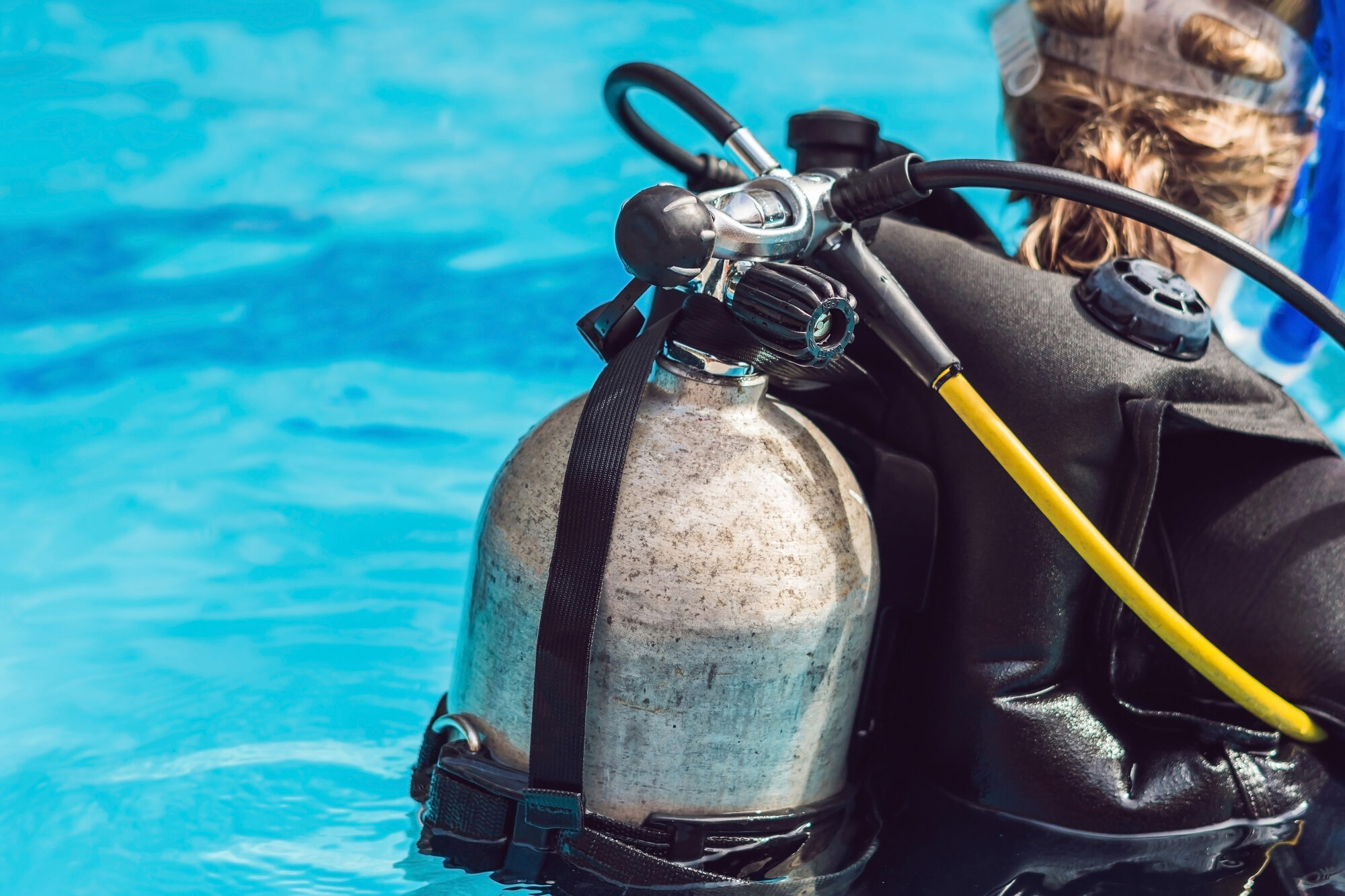
A jacket-style BCD wraps a bladder and a harness into one garment. PADI describes the bladder as sitting mainly on your back and sweeping forward under your arms, so you are balanced when you inflate it at the surface. Many jackets have pockets, a cummerbund waistband and integrated weight systems built in.
A backplate and wing splits the job into three parts. A plate sits against your back, a harness of webbing holds it on you, and a bladder (the wing) is clamped between the plate and your cylinder. All the lift lives behind you. PADI notes that wings have grown popular for recreational single-tank diving because of their simplicity, and that most technical divers use them because they can also carry twin cylinders.
Either way, the essentials are the same. PADI says any BCD should have an adjustable band, a low-pressure inflator/deflator and an overpressure valve. Quick dump and pockets are the optional extras.
Lift: how much do you really need?
Lift is the buoyancy a BCD can provide when fully inflated. One manufacturer manual defines it as the capacity in fresh water at sea level, and says the figure is printed on a label sewn on the BCD. Always read that label on your own unit rather than trusting a catalogue.
Manufacturer pages show how wide the range is. Dive Rite lists its Travel wing at 25 lb (11.3 kg) and its Voyager at 35 lb (15.8 kg). Hollis lists the ST22 at 22 lb (10 kg) and the ST35 at 35 lb (16 kg), with the lighter wing aimed at warm water and travel and the larger one at cold water. Halcyon lists its Evolve wing at 18 kg (40 lb) and 27 kg (60 lb). The Scubapro Hydros Pro jacket page lists 40.5 lb (about 18.4 kg), though that page says the model is no longer sold, so treat it as a reference point only.
A bigger wing is not a better wing. Extra lift is for carrying heavier loads, such as thick exposure protection, steel cylinders and extra lead. In warm water with an aluminium cylinder, a smaller bladder is enough and packs down smaller. Ask yourself what you carry on your heaviest dive, then choose lift to match, not to exceed it by a mile.
Trim and in-water feel
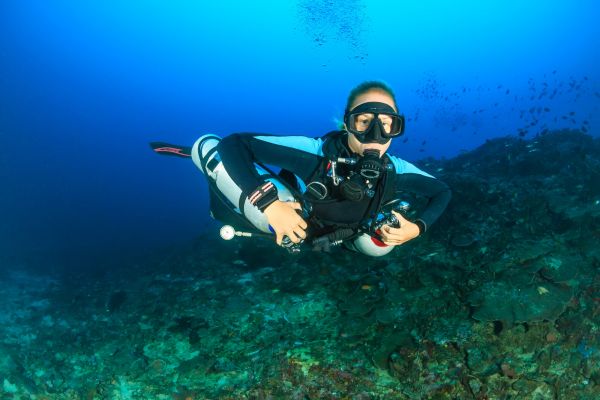
This is where the two styles feel most different. A dive-course provider’s jacket-versus-wing comparison says a jacket distributes air around the torso and tends to tip the diver upright, while a wing concentrates volume at the back and supports a horizontal, streamlined position. Hollis describes its DT50 double-cylinder wing as sending more lift toward the hips for better horizontal trim, and a DIVEIN review credits the ST wings’ tapered shape (narrow at the shoulders, wider at the base) with letting gas move down the bladder to help hold a flat position.
Upright is not bad. It is comfortable at the surface and fine for relaxed drifting over a reef. A horizontal body is more efficient, though, because it presents less frontal area and keeps your fins from stirring the bottom. If you have worked through our ten tips for better buoyancy control, you know that comfortable buoyancy depends on correct weighting and breath control first. No BCD will fix a diver who is overweighted. The right BCD simply makes good buoyancy easier.
Comfort, adjustability and travel weight
Jackets win on first-time comfort. They are padded, forgiving and quick to put on. The same comparison says jackets suit divers with mobility difficulties at the surface because of the extra buoyancy around the torso.
Backplate systems win on adjustability. Dive Rite’s harness uses 2 in (50 mm) webbing rated at 7,000 lb breaking strength and comes in sizes small through XXL. Hollis offers a Solo harness (continuous weave, no buckles) and an Elite harness with two quick-release buckles, and the DIVEIN review counts eight D-rings on the ST harness, two per shoulder, two at the waist and two on the crotch strap. Because the parts are separate, you can replace a worn wing or swap a plate without buying the whole system again.
Travel weight is a place where careful reading pays off. Manufacturer figures are listed per component, so add them up:
- Dive Rite TransPac harness: 4.25 to 5 lb (2 to 2.25 kg), depending on size, plus Travel wing 2.4 lb (1 kg). That is roughly 6.65 to 7.4 lb (about 3 to 3.3 kg) before you add anything else.
- Hollis: aluminium plate 1.5 lb (1 kg) versus stainless steel 6.5 lb (3 kg), per the DIVEIN review. Choosing aluminium saves 5 lb (2 kg) of luggage, though it also changes how much lead you need to carry.
- Scubapro Hydros Pro (jacket, now discontinued): 11.65 lb (about 5.3 kg), with folding Smart-Pack straps and a carry-on backpack.
The comparison is not perfectly like for like because each manufacturer states its weights differently, but it shows why many travellers like a compact wing. A steel plate also isn’t dead weight: the DIVEIN reviewer says the stainless plate with the larger wing cut lead needs by roughly 4 to 6 lb (about 2 to 3 kg), and described it as lowering the centre of gravity.

Integrated weights, cost and who each suits
Many jackets, the Scubapro Hydros Pro among them, offer integrated weight pockets. Whatever system you use, always practise releasing the weights. One magazine fitting guide says you should be able to find and pull the releases without looking, with little effort, and suggests loading your usual weight in the shop and rehearsing a ditch. Backplate systems handle weight differently. The Hollis ST system lists optional pockets holding up to 12 lb (5.4 kg) per side, plus a trim pocket on the tank band.
On cost, I am not quoting prices, because they change by retailer, size and bundle. What the sources do tell us: the DIVEIN reviewer calls a complete Hollis system a “significant investment” while calling it good value, and Hollis pre-assembles its ST and DT systems. Remember to compare complete packages (harness, plate, wing, inflator, weights) rather than headline prices. If you want a sense of how gear myths and cost assumptions skew buying decisions, our top 10 diving myths is a good read.
| Feature | Jacket BCD | Backplate and wing |
|---|---|---|
| Lift location | Back, sweeping around the torso | All behind you |
| Typical trim | Tends upright | Supports horizontal |
| Surface comfort | Good, padded | Depends on harness and fit |
| Adjustability | Limited to built-in straps | High; swap plate, wing, harness |
| Travel weight | Varies; travel jackets exist | Often lighter with aluminium plate |
| Weights | Integrated pockets common | Optional pockets, belt or trim pockets |
| Suits | New divers, surface comfort, rental familiarity | Divers wanting streamlining, modularity, twins later |
In short: if you want simplicity and an easy surface, a jacket is the safe pick. If you want trim, a tidy profile and room to grow, a backplate system rewards the small effort of learning it. The DIVEIN reviewer recommends the Hollis ST for recreational single-tank divers, especially those moving from jackets, and for people who want one setup for warm and cold water.
How to fit a BCD
Fit is the most important factor, according to a Scuba Diving magazine instructor column. Its advice, in order:
- Mount the BCD on a cylinder before judging it. That shows how it feels when you climb out of the water.
- Snug the cummerbund and straps, but leave room for normal movement and breathing.
- Walk around and turn at the waist. The cylinder and BCD should move with you.
- Check yourself in a mirror.
- Set the straps slightly below their midpoint, so you can loosen them for a thick wetsuit or tighten them for a swimsuit.
- Inflate fully and check for squeeze that restricts movement or breathing.
- If weights are integrated, test the releases.
When mounting the cylinder, one manual advises wetting the tank band first, since webbing stretches slightly when wet, and leaving a 4 in (10 cm) overlap on the waistband. Follow your own BCD manual for details, because each design differs.

Try before you buy, and dress for it
Bring the exposure suit you dive in most, or at least a similar thickness. A BCD that fits over a swimsuit can feel tight over a 7 mm wetsuit. Ask the shop to put a cylinder on it, inflate it and let you rehearse a weight release before you commit.
Shop checklist
- Adjustable band, low-pressure inflator/deflator and overpressure valve (PADI’s essentials).
- Lift suited to your heaviest dive, not your lightest.
- Weight releases you can find and pull without looking.
- Replaceable parts. Scubapro’s page, for example, says most parts including buckles can be replaced without stitching.
- Sizes that cover your torso and your thickest suit.
- Clear service information, because annual servicing is the norm.
Maintenance and inspection
After every dive, one manufacturer manual suggests: rinse the outside with fresh water, add water through the mouthpiece until the BCD is about one-third full, inflate and shake to rinse the interior, drain through the mouthpiece, then inflate and let it dry inside and out. Store it slightly inflated in a cool place, out of direct sun, and don’t hang it on hooks that could puncture the bladder. DAN’s gear advice, published in Scuba Diving, adds that UV damages equipment, so keep kit in shade.
PADI says BCDs should be serviced annually or as the manufacturer recommends. A technician inspects the bladder, o-rings and low-pressure inflator, and the second stage if one is attached. DAN warns that the inflator and bladder can deteriorate and a failure at depth could cause a serious accident. PADI’s at-home test is simple: fully inflate the BCD, submerge it in a bathtub and watch for bubbles. It does not replace professional inspection.

Frequently asked questions
Is a backplate and wing only for technical divers?
No. PADI says wings are growing in popularity for recreational single-tank diving, and DIVEIN recommends the Hollis ST system for recreational divers.
Do I need a bigger wing for cold water?
Usually, yes, because you carry more lead and bulky suits. Hollis pairs its larger ST35 with cold water and the ST22 with warm water and travel.
Can I drop my weights in a hurry with a backplate?
Only if your system is set up to allow it. Whatever you choose, practise a release until you can do it without looking.
How often should I service my BCD?
Annually, or as the manufacturer recommends, per PADI and DAN.
Which is more comfortable?
It depends on fit, not on category. A well-fitted harness can be as comfortable as any jacket.
Sources:
PADI, beginner’s guide to buying a BCD;
PADI, dive gear service;
Hollis, choosing a buoyancy system;
DIVEIN, Hollis ST review;
Dive Rite, TransPac packages;
Halcyon, Evolve wing;
Scubapro, Hydros Pro;
Cursos de Buceo, jacket vs wing;
Scuba Diving, Ask an Instructor (Nov 2006);
Scuba Diving, Ask DAN on gear trouble;
Northern Diver, BCD manual.