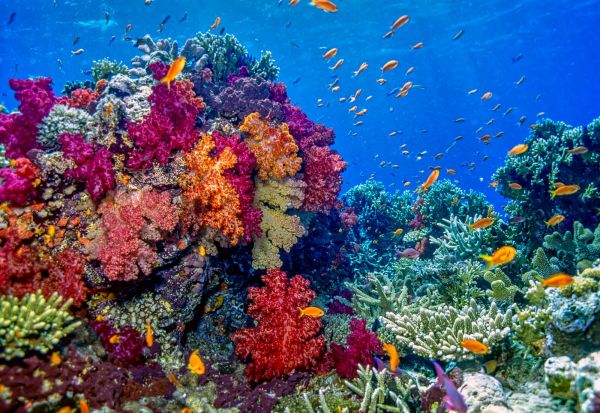

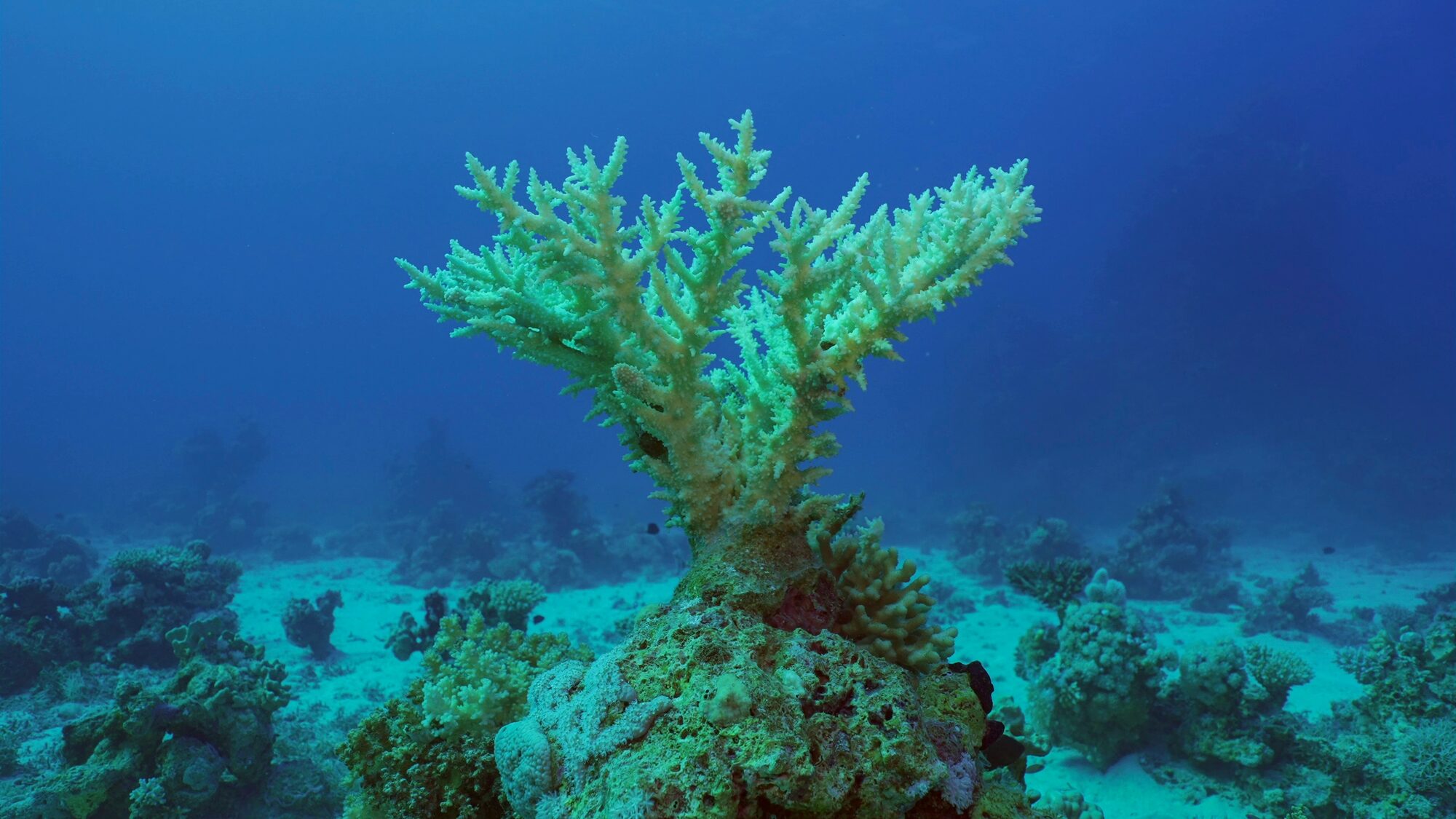
Every diver who has returned to a favourite reef after a hot summer knows the gut-punch of seeing it ghost-white. This week, Stanford researchers reported something that makes that sight a little less final: in the lab, bleached coral fragments that were held against healthy clones of themselves regained their colour and their algae in about seven weeks, while the ones left alone died. It is not a cure for bleaching, and the authors say so. But it is a genuinely useful clue about how corals might be helped to recover, and it is worth understanding what it does and does not mean for the reefs we dive.
- The study: Stanford University team led by PhD student Danny Collins, published in Science Advances on 14 October 2026.
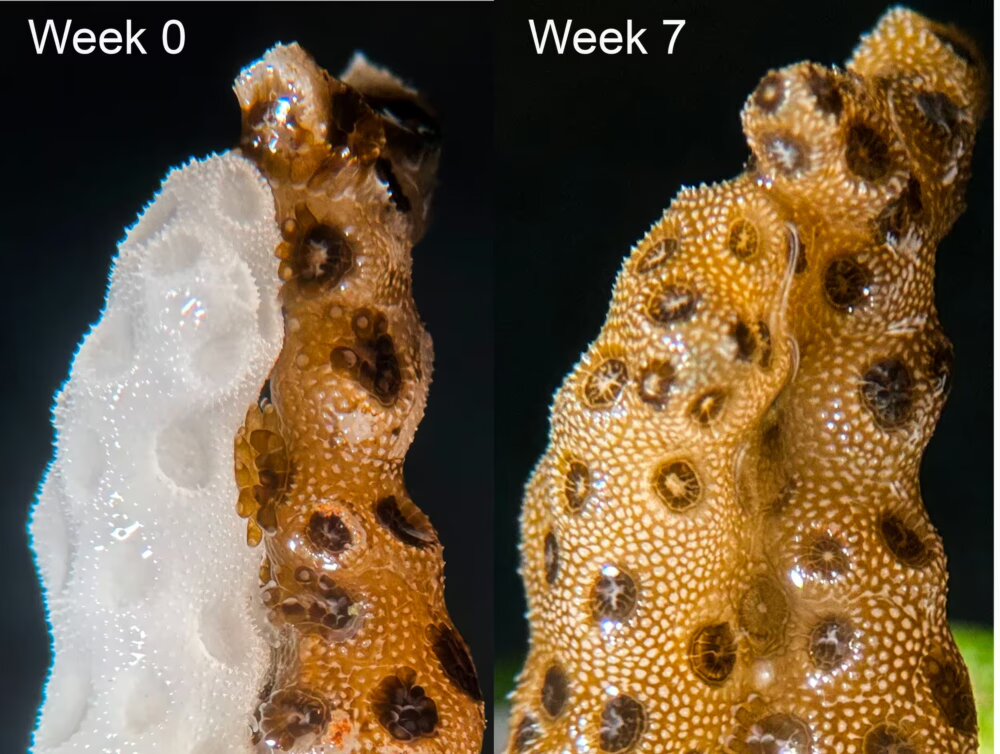
- The result: bleached coral fragments touching a healthy genetic copy recovered fully within roughly seven weeks; bleached fragments kept apart died.
- The catch: lab work on small fragments, and it needs a healthy clone of every bleached coral, which the authors say is not feasible at reef scale.
- The context: NOAA says bleaching-level heat stress hit 84% of the world’s reef area between early 2023 and mid-2025.
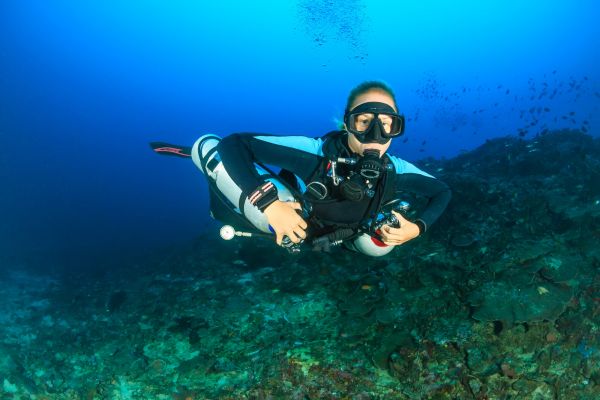
- For divers: nothing changes on the reef today: keep buoyancy sharp, keep your fins off the bottom, and consider joining reef-survey programmes.
What the Stanford team actually did

According to Stanford’s own release, Collins built ten pairs of coral fragments. Each pair came from the same coral colony, so the two pieces were genetically identical, but one piece was bleached and the other was healthy. In five pairs the fragments were placed in direct contact. In the other five they were held a few millimetres apart.
The idea did not come from a grand plan. Senior author Steve Palumbi had noticed, after a tank tipped over, that a bleached coral touching a healthy one seemed to regain its colour. Collins, who had been studying how contact with plastic debris can spread coral disease, wondered whether the same contact route could carry something helpful instead of something harmful.
Why bleaching happens, in plain language
Reef-building corals are partnerships. The coral animal gives tiny algae (zooxanthellae) a home, and the algae supply most of the coral’s food and its colour. When the water stays too warm for too long, that partnership breaks down and the coral expels its algae. NOAA’s ocean service explains that a bleached coral is not necessarily dead, but it is starving and more vulnerable to disease. If the stress passes quickly, the coral can take algae back and recover. If it drags on, the coral dies.
Heat is the leading cause, but NOAA also lists intense sunlight, dilution from heavy rain and runoff, extreme low tides and even cold snaps. That is why the same reef can bleach in different seasons for different reasons.
What they found
| Question | What the team reported |
|---|---|
| Did touching help? | Bleached fragments in contact with healthy clones fully recovered in about seven weeks. Fragments kept apart died. |
| How fast did algae move? | Algae crossed from the healthy piece to the bleached piece within three days of contact. |
| How long did contact need to last? | About a week was enough. Pairs separated afterwards still took about seven weeks to recover, the same as pairs left together. |
| What drove the recovery? | Mostly the transferred algae multiplying inside the bleached piece. In the second week they doubled roughly every four days, around ten times faster than in wild corals. |
| How was it moving? | Microscopy showed tiny channels in the tissue lining up soon after contact, forming a bridge for algae and nutrients. |
Figures are from the Stanford release; press coverage describes the same experiments with slightly different wording on contact time.
Why this is not a reef rescue plan (yet)
The authors are upfront about the limits. The method needs a healthy, genetically identical copy of every bleached coral, and they state that doing this at the scale of a real reef is not feasible. The work used small fragments in a laboratory, not colonies on a reef. Press coverage reported that the test used a single species, the cauliflower coral Pocillopora damicornis, and that fragments from different genetic backgrounds did not heal each other. Treat the species detail as reported by journalists rather than confirmed by the release, which did not name it.
Independent scientists quoted in coverage were interested but cautious. Andréa Grottoli of Ohio State, who was not involved, called the findings “super interesting”. Terry Hughes of James Cook University pointed out that grafting algae cannot rebuild coral populations that have already died, and argued that cutting greenhouse gas emissions is still the most reliable way to give corals a chance.
What could come next
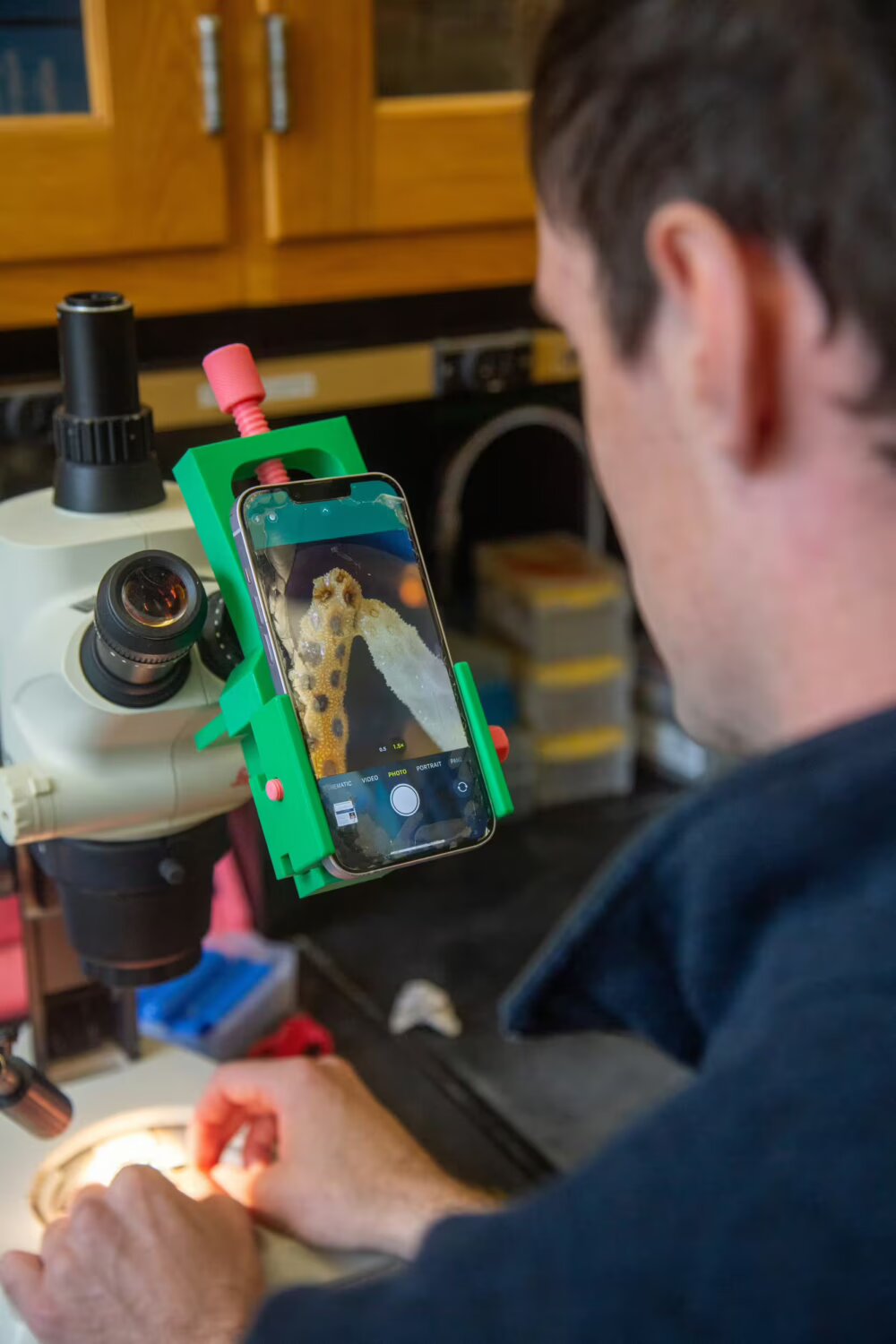
The more promising lesson is the mechanism, not the contact. If healthy algae can move into a bleached coral and then multiply quickly, researchers may be able to deliver those algae another way. Stanford says next steps include testing delivery methods that do not require continuous contact, and exploring whether algae could be collected from healthy corals before a heat wave and applied in batches afterwards. KQED reported that field tests are planned in Hawai’i and Palau over the coming months to years. Funding came from the National Science Foundation and Stanford, including its Big Ideas for Oceans programme.
Palau is also a place many divers dream of. Whatever happens with the science, it is a reminder that reef monitoring and restoration work often happens on the dive sites we visit.
The wider picture divers should know
NOAA announced the fourth global coral bleaching event on 15 April 2024 and, in June 2026, said it likely ended in mid-2025. It reported that bleaching-level heat stress affected 84% of the world’s coral reef area between early 2023 and mid-2025, with mass bleaching documented in at least 83 countries and territories. For comparison, the share of reef area under that level of stress was 21% in 1998, 37% in 2010 and 68% in 2014-2017, according to the Global Coral Reef Monitoring Network’s summary of NOAA’s findings.
The sobering part is the outlook. NOAA’s Coral Reef Watch coordinator said reefs are now likely to bleach on a near-annual basis, and NOAA flagged an expected El Niño as a risk for renewed widespread bleaching, with Hawai’i, Florida and the Caribbean at high risk. We covered the third global event back in 2016 in Global Coral Bleaching Event Hits Reefs; the numbers have grown since.
What divers can do on the next trip
- Check conditions before you book. NOAA Coral Reef Watch publishes a four-month bleaching outlook with categories from “no stress” to “bleaching alert level 2, mortality likely”. Ask your operator what the reef looked like last month, not last year.
- Fix your weighting. Carrying too much lead makes you drop onto the bottom at every adjustment. Our simple buoyancy check takes a few minutes at the surface.
- Treat bleached coral as alive. It is pale, hungry and fragile. Do not touch it, kneel on it or brush it with your gear.
- Make your observations count. Reef Check’s EcoDiver programme trains recreational divers to survey reefs with a standard protocol. NOAA also notes that it relies on field observations to decide when global events begin and end.
- Choose operators who report and restore. Many resorts now run coral nurseries; ask what they track and share.
How to read “coral breakthrough” headlines
Restoration stories are often more hopeful in the headline than in the paper. A few quick checks help: was the work done on a reef or in a tank, how many samples were used, was the species named, and do the authors describe a route to scale? Here the honest answers are a tank, ten pairs, a single species reported by the press, and “not yet”. That does not make the finding unimportant. A small, clean experiment that shows a mechanism is exactly how many later field techniques begin, and the planned trials in Hawai’i and Palau will be the real test.
Frequently asked questions
Can bleached coral recover on its own?
Yes, if the stress is mild and short. NOAA says corals can recover from mild bleaching by regaining their algae, but prolonged stress leads to death.
Does this study mean we can reverse bleaching on the reef?
Not yet. The experiment used small fragments in a lab and needs a healthy clone for each bleached coral. The authors see it as a clue for future restoration techniques, not a ready-made fix.
Is a bleached reef dead?
Not necessarily. White coral is stressed and starving, and some of it can recover, but a long heat wave can kill large areas.
What is the best thing a diver can do for reefs?
Keep your buoyancy and finning clean, do not touch anything, and support monitoring through programmes such as Reef Check EcoDiver. Broader solutions depend on cutting emissions, as the scientists quoted above stress.
Sources: Stanford Doerr School of Sustainability; Science Advances (DOI 10.1126/sciadv.aeh1580); KQED; DeeperBlue; NOAA NESDIS; GCRMN; NOAA National Ocean Service; NOAA Coral Reef Watch; Reef Check EcoDiver.