
Good buoyancy is the difference between a dive that feels like flying and one that feels like a workout. For many divers the fix starts before they even get wet, with getting their weighting right. Divers Alert Network (DAN) lists overweighting as one of the two most common buoyancy mistakes, and technical instructors say the same. This guide explains why weighting matters, five ways to test yours, and when to repeat the test.
Three things control your buoyancy: your BCD, your weights and your lungs
Common errors: diving overweighted, and not adjusting weight when kit or conditions change
Starting points: about 10 percent of body weight with a 6 mm full wetsuit and about 5 percent with 3 mm (DAN); about 10 percent for UK sea diving and 7 percent for fresh water (BSAC, as reported by Divernet)
Check again whenever you change suit, tank or water type, and on the first dive of every trip
Why weighting matters more than most divers think
Lead is a tool for one job: letting you stay under at the end of the dive, when your tank is nearly empty and your suit is at its most buoyant. Anything beyond that is dead weight you must cancel out with air in your BCD. Divernet notes that many divers, including experienced ones, carry a few kilos to tens of kilos more than they need, often because they were heavily weighted as students to make skills easier and never revisited it.
Scuba Diving magazine puts a number on the cost: each extra pound (about 0.45 kg) of lead needs roughly a pint (about half a litre) of air in your BCD to offset it. Carry five pounds too much and you are hauling about 2.4 litres of extra air around the whole dive.
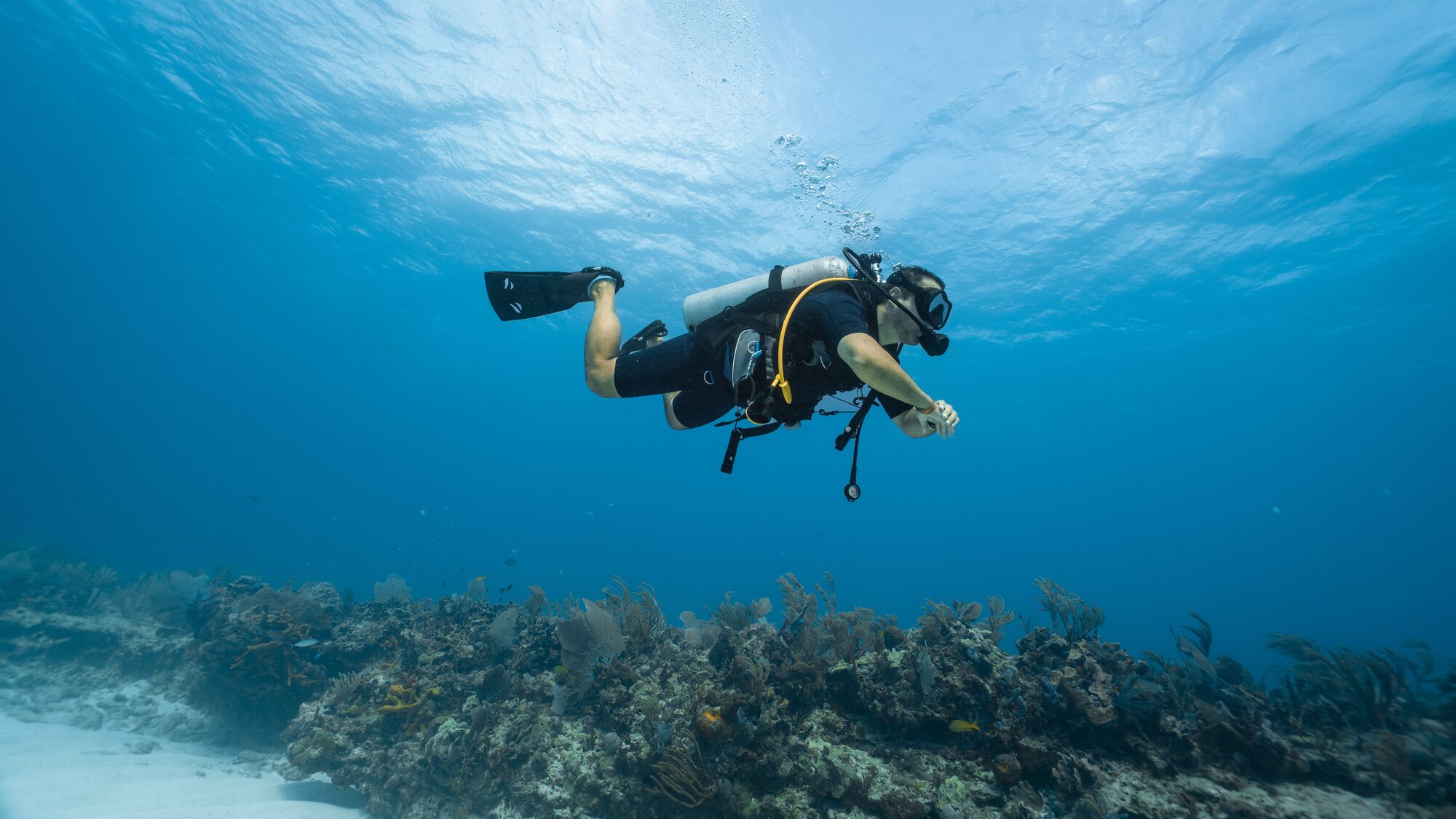
The three parts of the buoyancy puzzle
DAN describes buoyancy as the combination of your buoyancy compensator (BCD), your weights and your lung volume. Your lungs matter more than many new divers realise. Scuba Diving magazine estimates they can provide up to about 10 lb (4.5 kg) of lift, and that an ordinary breath changes your buoyancy by around a pound. That is why the best way to fine-tune your depth once you are close to neutral is to change how deeply you breathe, rather than adding or venting air. Never hold your breath to control depth.
What overweighting does to your dive
If you carry too much lead, you compensate with extra air in the BCD. DAN notes this pushes you upright, which increases drag, effort and air consumption. Divernet adds that a vertical body position makes your fins hit the bottom, stirring up silt and damaging coral. It also warns against adding weight out of fear of a rapid ascent: extra weight needs extra gas in the BCD, which is harder to vent in a hurry, so it can make that risk worse.
Being underweighted has its own costs. DAN says it can leave you tired from fighting to stay down and can raise decompression stress. The goal is neither heavy nor light, but just right.
Five ways to check your weighting
Different agencies teach slightly different tests. They all aim for the same result: neutral buoyancy at the end of the dive, with no air in your BCD.
| Method | How it works | Source |
|---|---|---|
| Eye-level float test | In water too deep to stand, with the BCD empty, hold a normal breath. Your eye level should sit at the surface. Adjust in steps of about 2 lb (1 kg). | DAN |
| Near-empty tank float test | With about 500 psi (35 bar) in the tank and an empty BCD, hold your breath at the surface. You should float at eye level and sink slowly as you exhale. | Scuba Diving magazine |
| Shallow-water float test | With about 30 to 40 bar in the cylinder and an empty BCD, take a big breath. If you hold neutral, weighting is about right. If you are stuck on the bottom, remove some lead. | GUE, via Divernet |
| Hover test | With about 50 bar left, stop finning and see whether you can hold 5 m (16 ft) or your safety stop depth with no gas in your BCD. | IANTD, via Divernet |
| Body-weight starting point | Start at about 10 percent of body weight for UK sea diving or 7 percent for fresh water, then confirm you can hold 3 m with your tank at reserve. | BSAC, via Divernet |
Starting points by suit and tank
DAN suggests a baseline of about 10 percent of your body weight for a 6 mm full wetsuit, or about 5 percent for 3 mm. Drysuits and thick neoprene need more weight than thin neoprene or a dive skin, and aluminium tanks need more than steel. Wetsuit buoyancy also changes with depth. Scuba Diving magazine says a suit keeps roughly half its surface buoyancy at 33 ft (10 m), a third at 66 ft (20 m) and a quarter at 99 ft (30 m). A thin tropical suit may give under 2 lb of lift while a thick cold-water suit can give 20 lb or more, and wetsuits lose buoyancy as the neoprene ages.
These are starting points only. Use them to choose where to begin, then test.
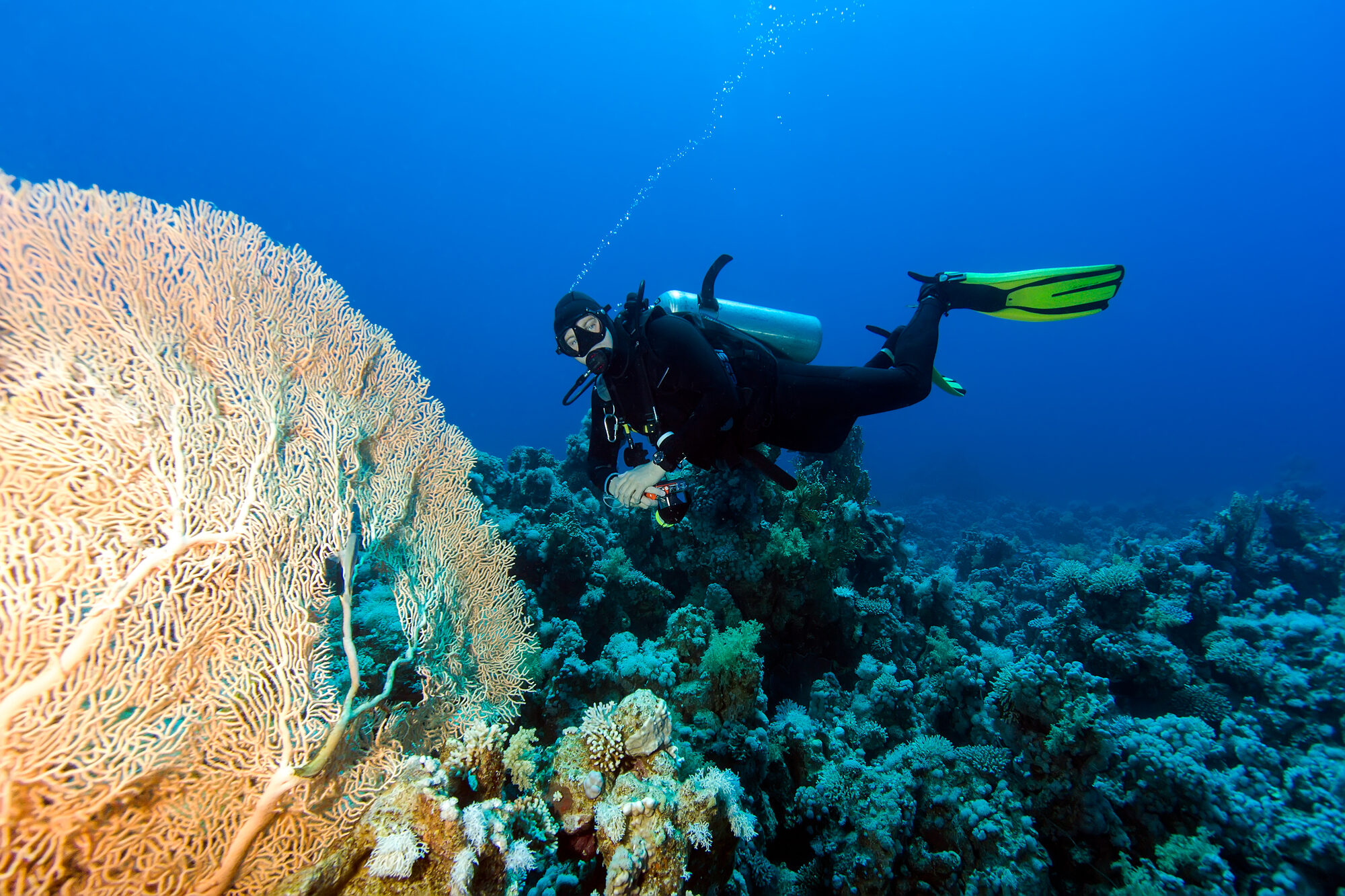
Your tank gets lighter as you dive
Air has weight, and you breathe it away. Divernet gives the figure of about 1.3 grams per litre, so a 12 litre cylinder at 200 bar holds roughly 3.1 kg of air, and only about 0.8 kg at 50 bar. You become more buoyant by well over 2 kg as the dive goes on. Scuba Diving magazine makes the same point for an aluminium 80, which loses roughly 5 lb of air weight as you use it.
That is why weight tests use a nearly empty tank. It also explains DAN’s end-of-dive check: you should be able to hover at about 15 ft (4.5 m) with around 500 psi (35 bar) in an aluminium tank and no air in the BCD. If you cannot, you are carrying too much.
When to re-check your weighting
Your weighting is not fixed. Divernet recommends checking:
- before every dive with new or different gear, including a different cylinder or suit
- on the first dive of a trip, or after a break from diving
- at the start and middle of each season
- when you switch between fresh water and salt water, because salt water is denser and gives more lift
- when you add kit such as a camera, light or scooter
Weighting and trim: where the lead goes
Trim is your body position when you are neutral and still. The aim is a level, horizontal position with your legs stretched out behind you. Scuba Diving magazine suggests shifting weight up or down your body if your legs sink or rise. Divernet adds that drysuit divers generally do well with weight at the hips, wetsuit divers with weight a little higher, and that you can adjust by moving the cylinder in the BCD, repositioning a belt or using trim pockets. A buddy watching you from the side is the best tool. If you are working hard to hold position, do not assume you need more lead. Sort out trim first.
DAN also advises spreading weight evenly side to side, reviewing weight placement with your buddy, and knowing how to drop each other’s weights. Weight belts are the easiest to ditch. Integrated pockets are more comfortable but may have several release points, and ankle weights are harder to release in an emergency.
Common weighting mistakes
- Adding lead when you feel floaty. The cause may be too much gas in your suit, not too little lead.
- Adding ankle or drysuit weight without taking some off the belt. The total just creeps up.
- Weighting for a full tank. Forgetting that your tank gets lighter leaves you struggling at the safety stop.
- Never retesting. Your needs change with your suit, your skills and the season.
- Using the BCD to correct poor trim. That adds drag instead of fixing the cause.
On your first dive of the trip, ask your guide or instructor to help with a weight check in shallow water. Write down your suit, tank, water type and total lead in your logbook, so next time you have a tested starting point instead of a guess.
Frequently asked questions
How much weight do I need?
As a starting point, DAN suggests about 10 percent of body weight with a 6 mm wetsuit and about 5 percent with 3 mm. Then test, because your suit, tank and water all change the answer.
Why do I need less weight in fresh water?
Salt water is denser, so it pushes you up more. Divernet reports BSAC’s starting point as about 10 percent of body weight for UK sea diving and about 7 percent for fresh water.
Should I add weight to make descending easier?
Usually not. A calm, full exhale and slightly deeper breath out should start your descent. Too much weight just creates an air-in-the-BCD problem later.
Can I use ankle weights?
They can offset buoyant legs, but DAN notes they are harder to drop in an emergency, so check trim and weight placement first.
For more skills advice, see our earlier article, Ten tips for better buoyancy control.
Sources: Divers Alert Network, guidance on weighting and buoyancy; Divernet, Dive like a pro: weighting to dive in comfort; Scuba Diving magazine, buoyancy control tips.