Thinking about learning to scuba dive? The first step is simpler than most people expect. You need to be comfortable in the water, answer some health questions honestly, and set aside a few days. This guide walks through who can learn, what the swim test and medical form involve, how the course is structured, which skills feel tricky at first, and how to pick a good dive centre.
Minimum age: 10 for a junior Open Water certification; younger children can try a pool-only programme
Swim test (PADI): 10 minutes floating or treading water, plus a 200 m swim, or 300 m with mask, fins and snorkel
Course length: typically 4 to 7 days, split across theory, pool and open water
Open water dives: 4 (PADI), to a maximum of 18 m (60 ft)
Fitness: reasonable health and comfort in the water, not athletic ability
Who can learn to dive?
Most healthy people can. PADI offers a pool-based Bubblemaker programme from age 8 and a Junior Open Water Diver certification from age 10. The junior course matches the standard one but has different depth limits. Anyone under 18 needs parental approval, divers up to age 12 must dive with a parent, guardian or PADI professional, and divers aged 12 to 15 must dive with a certified adult over 18. SSI’s Open Water programme also starts at 10, and its 10 and 11 year old divers are limited to 12 m (40 ft). There is no upper age limit, but everyone must meet the medical and water-skills requirements.

The swim test
You will not need to be an athlete. PADI asks students to float or tread water for 10 minutes without flotation aids, then swim 200 m (or yards) without stopping, or 300 m wearing mask, fins and snorkel. There is no time limit and any stroke is fine. Adaptive techniques are available for people with physical challenges. If the thought of the test worries you, practise at a local pool before you book; being relaxed in the water matters more than speed.
The medical questionnaire
Before any in-water training you will complete a diver medical questionnaire. Some conditions mean a doctor must approve you for diving first, and in some countries a physician’s signature is required for everyone. Read the form before you book so there are no surprises, and answer it truthfully. It exists to protect you, because some health conditions become more serious under pressure.
How the course works
Open Water training has three parts, and each builds on the last.
| Stage | What happens | Details (PADI) |
|---|---|---|
| 1. Knowledge development | Learn how pressure, gear, planning and safety work | Online eLearning or classroom, with a manual on the traditional route |
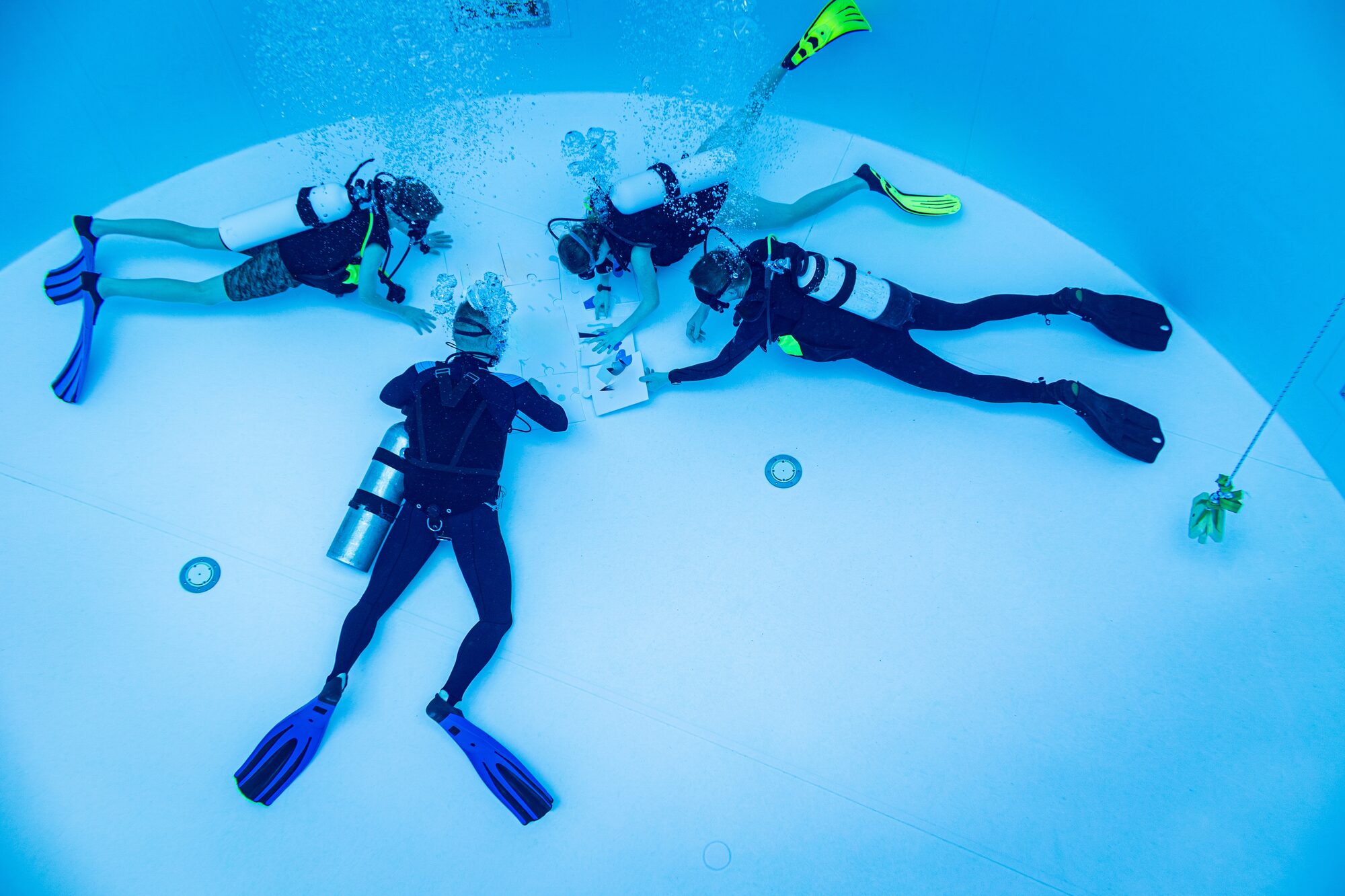
| 2. Confined water | Practise core skills in a pool or pool-like site, including assembling your gear | Gear assembly is practised at least 5 times |
| 3. Open water | Apply the skills on real dives with your instructor | 4 dives, usually over 2 days; dives 1 and 2 to 12 m (40 ft) or shallower, dives 3 and 4 to 18 m (60 ft) |
PADI says the whole course typically takes 4 to 7 days, can be finished in as little as 4 days, and can stretch to a year if you need to fit it around life. Instructors repeat skills until you feel ready to move on, so there is no pressure to keep pace with anyone else.
Skills you will practise, and the usual stumbling blocks
Dive centre Circle Divers lists the skills that feel odd at first, and they are the same ones most beginners mention.
- Clearing a flooded mask. Water seeping in is normal. You clear it by breathing out through your nose and tilting your head, and it becomes routine quickly.
- Equalising your ears. Pinch your nose and blow gently, doing it every few metres as you descend. Equalise early and often, and if it hurts, go back up a little and try again.
- Buoyancy control. Bouncing up and down is common and can take a few dives to settle. Once buoyancy clicks, Circle Divers says, moving underwater feels effortless.
- Breathing through a regulator. It feels strange at first, but most people stop noticing it after their first practice dive.
Other advice for beginners from Dive Right In Scuba includes doing a proper gear check and buddy check before every dive, keeping your ascent no faster than about 30 ft (9 m) per minute, and making a 3 to 5 minute safety stop at around 15 ft (5 m) at the end of your dive. Your instructor will teach and enforce the rules your agency uses, so treat these as the general picture, not a substitute for training.
How to prepare before day one
A little preparation makes the first sessions much more relaxing. These are practical suggestions rather than agency requirements.
- Do the paperwork early. Complete the medical questionnaire as soon as you book. If any answer means you need a doctor’s signature, you do not want to find that out the night before the course starts.
- Practise the swim test. Time yourself treading water for 10 minutes and swimming 200 m at a local pool. Knowing you can do it removes a common source of nerves.
- Get comfortable with your face in the water. Spend a little time in a pool wearing a mask and snorkel so having water around your face is familiar.
- Drink water and eat lightly. Dive Right In Scuba advises staying hydrated before, during and after dives and limiting caffeine and alcohol.
- Pack the basics. Swimwear, a towel, sunscreen, a water bottle and your certification paperwork. The dive centre can tell you what else to bring.
What to rent and what to buy
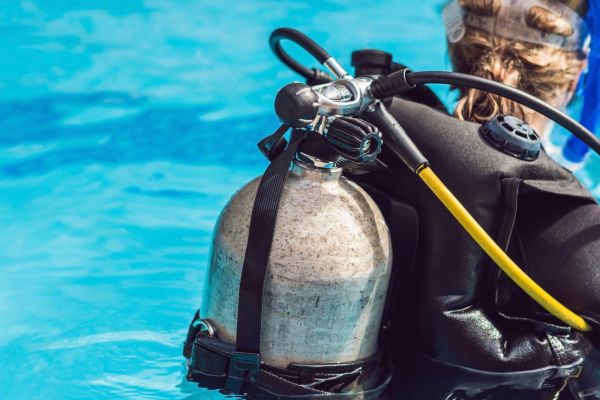
Dive centres normally supply the heavy kit for courses. Many new divers buy a mask first, because fit matters more than any other piece of gear, and add fins, a snorkel and later a computer as they get a feel for their diving. Wait to buy the big items, such as a BCD and regulator, until you have tried several types on rental dives.

How to choose a dive centre: a quick checklist
These are practical tips rather than agency rules, but they help you avoid the common disappointments.
- Check that the centre is affiliated with a recognised training agency such as PADI or SSI.
- Ask how many students each instructor teaches at once, and how many open water dives are included.
- Find out what is included in the price, such as eLearning, rental gear, certification fee and boat trips.
- Read recent reviews and ask whether you can visit before booking.
- Tell them about any health conditions and any worries. A good instructor will adapt.
If you are heading somewhere warm, consider finishing the theory and pool work at home and doing the four open water dives on holiday. Check with your dive centre first, because agencies and shops set their own rules for this, and give yourself a day of buffer so you are not rushing.
Frequently asked questions
Is learning to scuba dive hard?
Not once you are taught correctly. It takes guidance, practice and a calm mindset. Most students get past early struggles during their first pool session or first day of open water dives.
Do I need to be fit?
No. Being able to swim comfortably and being in reasonable health is enough, and divers of all ages and body types take part. Staying relaxed matters most, because calm divers use less air.
How long does it take?
PADI says typically 4 to 7 days, and as little as 4. You can spread it out if you need to.
Can children learn?
Yes. PADI offers Bubblemaker from age 8 and Junior Open Water from age 10, and SSI Open Water starts at 10, with depth limits and supervision rules for younger divers.
Already worried about a specific part? Read our guide to common diving myths for reassurance.
Sources: PADI, learning to dive requirements; SSI, scuba diving myths; Circle Divers, is scuba diving hard; Dive Right In Scuba, common beginner mistakes.