
Almost every new diver arrives with the same handful of worries: will I run out of air, will my ears hurt, what about the sharks, and can a beginner really handle it? The reassuring part is that scuba training is built around exactly these questions. Here is how seven common first-dive worries are handled, with what instructors, training agencies and diving publications actually say, so you can walk in with a calmer head.
Running out of air: you check your gauge often, plan with a safety margin and learn to share air with a buddy
Ear discomfort: descend slowly and equalise early and often
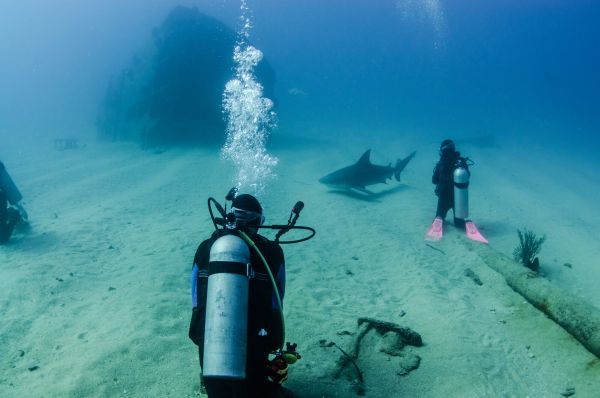
Sharks: encounters are rare and most sharks keep their distance
Fitness: basic fitness and comfort in water matter more than athletic ability
Ascending: slow, controlled ascents with a safety stop are standard practice
1. “What if I run out of air?”
Divers keep an eye on a pressure gauge throughout the dive and plan to finish with air in reserve, not on empty. Courses teach emergency skills too, including sharing air with your buddy, and SSI notes that regular gauge checks and safety margins are part of every dive plan. Dive Right In Scuba’s advice for beginners who notice their air getting low is simple: stay calm, move slowly with gentle fin kicks and take long, deep breaths. Running low is something you plan against, not something that sneaks up on a trained diver.

2. “Will my ears hurt?”
Equalising, the technique for balancing the pressure in your ears, is taught early in training. SSI’s advice is to descend slowly and equalise early and often, so pressure never builds up. Circle Divers describes the usual method: pinch your nose and gently blow, repeating every few metres on the way down. Dive Right In Scuba adds that if it hurts you should ascend a few feet and try again, rather than pushing through. Your instructor will practise this with you in the pool first.
3. “Aren’t there sharks everywhere?”
Not in the way films suggest. Shark encounters on dives are rare, and most sharks keep their distance. Many divers actively travel to see them. Dive publication DiveIn puts the global total of shark attacks at fewer than 100 a year, while hundreds of millions of sharks are killed by people annually, and divers are very rarely among those attacked. If you want to learn more, SSI offers a Shark Ecology specialty that covers shark behaviour.

4. “Do I need to be super fit?”
You need basic fitness and to feel comfortable in the water, but you do not need to be a marathon runner. SSI says good buoyancy and efficient finning reduce effort a lot, and Circle Divers says divers of all ages, body types and fitness levels take part. What matters most is staying relaxed, because calm divers use less air and enjoy longer dives.
5. “Won’t I get hurt if I come up too fast?”
Films love the idea that rising too quickly will make you burst. DiveIn explains the real concern: decompression illness, which happens when nitrogen bubbles form in the blood because pressure drops faster than the body can release it. That is why training teaches slow ascents and safety stops. Dive Right In Scuba’s beginner guidance is an ascent no faster than about 30 ft (9 m) per minute, followed by a 3 to 5 minute safety stop at around 15 ft (5 m). Your own agency and dive computer set the exact rules you follow.
6. “Isn’t it just a tank of oxygen?”
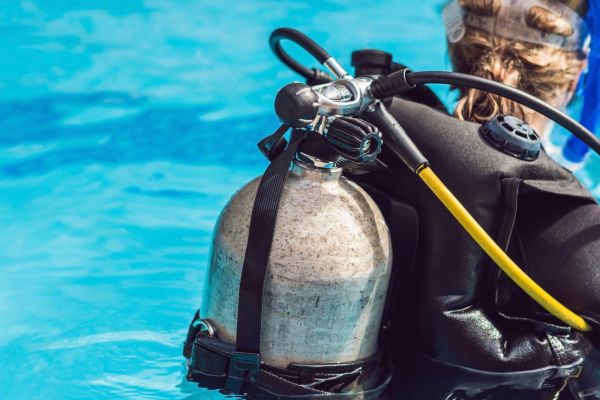
Most cylinders hold ordinary compressed air, roughly 21 percent oxygen and 78 percent nitrogen, which is the same mix you breathe at the surface. DiveIn notes that pure oxygen becomes toxic at fairly shallow depths, around 8 to 10 m, which is why divers do not breathe it. Enriched air, or nitrox, rarely exceeds 40 percent oxygen and is a separate option for certified divers.
7. “What if water gets in my mask?”
It will, at some point, and that is fine. Circle Divers lists water seeping into the mask as one of the most common first-timer struggles, and the fix is a standard skill: breathe out through your nose while tilting your head. You will practise it in the pool until it is boring.

Worry versus reality at a glance
| Worry | What actually happens | What training teaches |
|---|---|---|
| Running out of air | Divers monitor a gauge and plan reserves | Gauge checks, planning margins, buddy air sharing |
| Ear pain | Pressure builds only if you do not equalise | Slow descents; equalise early and often |
| Sharks | Encounters are rare; most keep their distance | Calm behaviour, respect for wildlife |
| Fitness | Comfort in the water matters more than strength | Efficient finning and buoyancy to save effort |
| Fast ascent | The concern is decompression illness | Controlled ascent rate and safety stop |
| Oxygen tank | Cylinders hold ordinary air (about 21 percent oxygen) | Gas basics; nitrox as a later option |
| Flooded mask | Happens to everyone | Mask clearing, practised in the pool |
Other things beginners wonder about
SSI’s list of myths also tackles cost, age and climate. Many beginners can start with a local course and rental equipment, and many divers buy a mask first before adding gear as they gain experience. Junior divers can start from age 10, and adults can learn at any age as long as they meet the medical and water-fitness requirements. And you do not need tropical water: good sites exist in lakes, quarries and colder coastal seas, where a wetsuit or drysuit keeps you comfortable. Finally, you do not need to go deep to enjoy it. SSI says much of the best diving is shallow, often within 10 to 18 m (33 to 60 ft), where sunlight reaches the reef and your air lasts longer.
Tell your instructor what is worrying you before you get in the water. It is the most useful thing a nervous beginner can do, and good instructors expect it. Then breathe slowly: it settles your nerves and makes your air last longer.
Frequently asked questions
Is it normal to feel nervous before a first dive?
Yes. Nerves are very common, and instructors are used to them. Going through skills in the pool first helps, because you can repeat anything until you feel comfortable.
Can I stop a dive if I feel uncomfortable?
Yes. Signal your instructor or buddy and ascend together at a normal, controlled rate. There is no prize for pushing through a problem.
What if I cannot equalise?
Stop descending, go up a little and try again gently. Do not force it. If it keeps happening, tell your instructor.
Are there specific health conditions that stop people diving?
Some medical conditions require a doctor’s approval before you dive. That is why every course starts with a medical questionnaire, and why answering it honestly matters.
Want more on common misconceptions? See our earlier article, Top 10 diving myths, and our guide to buoyancy control.
Sources: SSI, scuba diving myths; DiveIn, diving myths debunked; Circle Divers, is scuba diving hard; Dive Right In Scuba, common beginner mistakes.