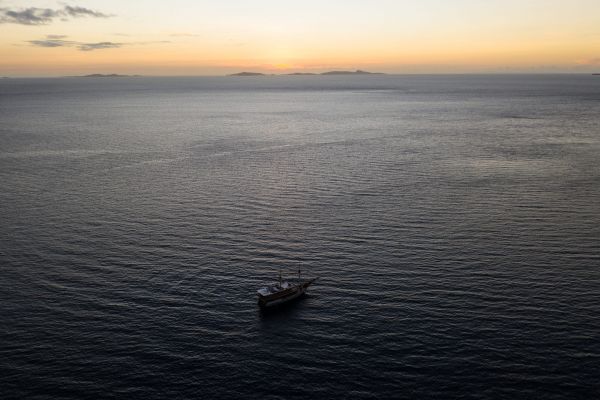

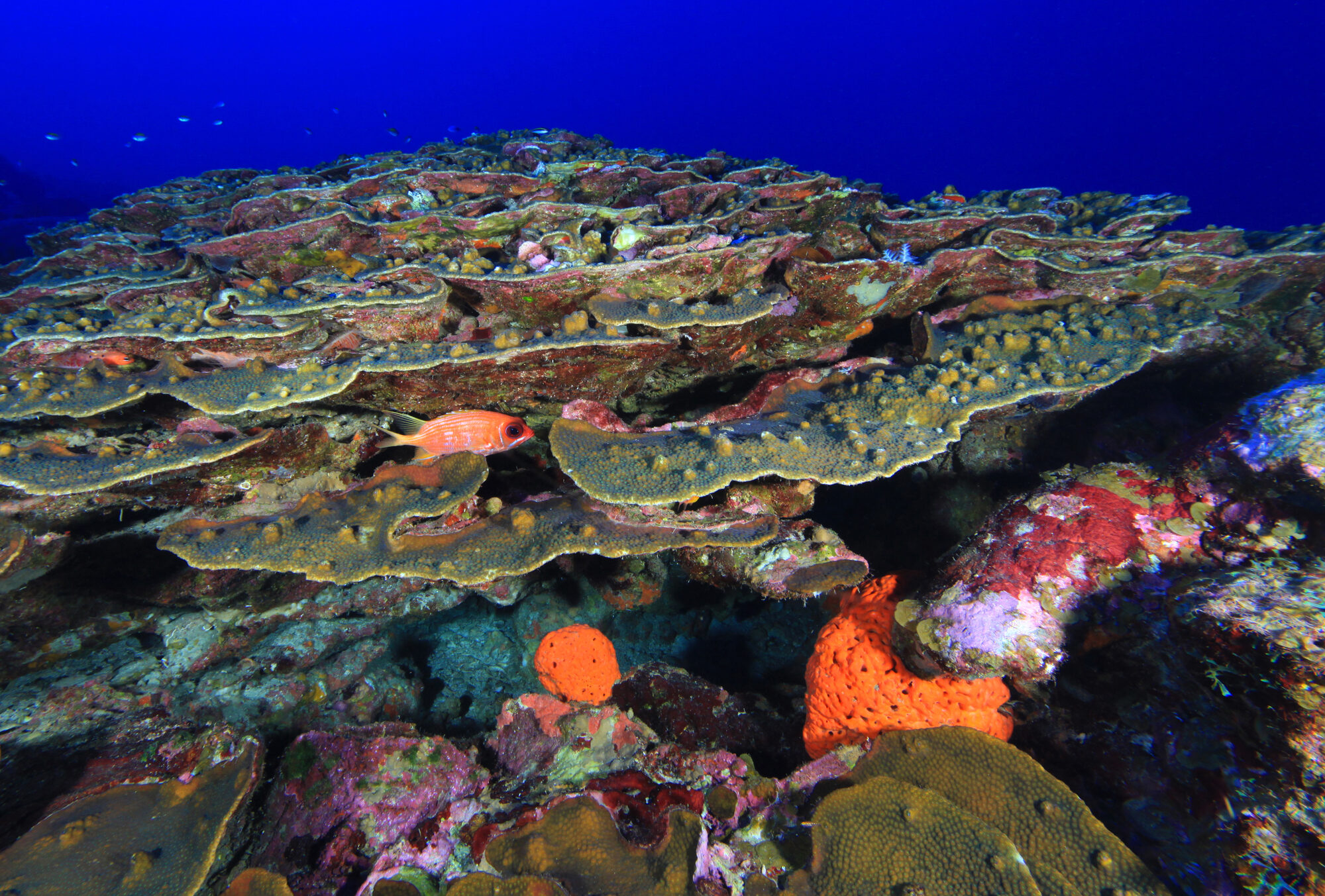
Some of the healthiest coral in the Gulf of Mexico sits more than 80 miles out to sea, far from any beach, harbour or town. A new study says that distance has not kept it clear of what happens on land: fertiliser nitrogen washed down the Mississippi River has been reaching the Flower Garden Banks reefs in growing amounts, and it arrived in its largest doses in the same years the reef was struck by heat, bleaching and disease.
- The study: “Increasing nitrogen loading in the Gulf of Mexico undermines coral reef resilience”, Science Advances (Vol. 12, Issue 37, 2026), led from the Max Planck Institute for Chemistry with Louisiana State University and NOAA-collected coral cores.
- The record: nitrogen isotopes in coral skeletons covering 1753 to 2023, about 270 years.
- The headline numbers: Mississippi-basin nitrogen made up roughly 30-50% of the total by the late 20th century, over 60% in recent decades, and up to about 80% in 2023.
- The reef today: NOAA monitoring put mean coral cover at about 56% in 2024, but 2023 and 2024 brought the first back-to-back bleaching years on record there.
- For divers: trips still run, but reef-friendly habits and gear disinfection matter more than ever.
What the researchers actually did
Corals lay down skeleton in yearly layers, much like tree rings, and the chemistry of each layer carries a fingerprint of the water the animal lived in. The team analysed the ratio of two nitrogen isotopes, nitrogen-15 and nitrogen-14, in star coral cores collected from the Flower Garden Banks National Marine Sanctuary during a NOAA expedition. Different nitrogen sources, such as natural ocean nitrate, fertiliser-rich river water and seabird guano, leave different signatures, so the cores work as a diary of where the reef’s nitrogen came from.
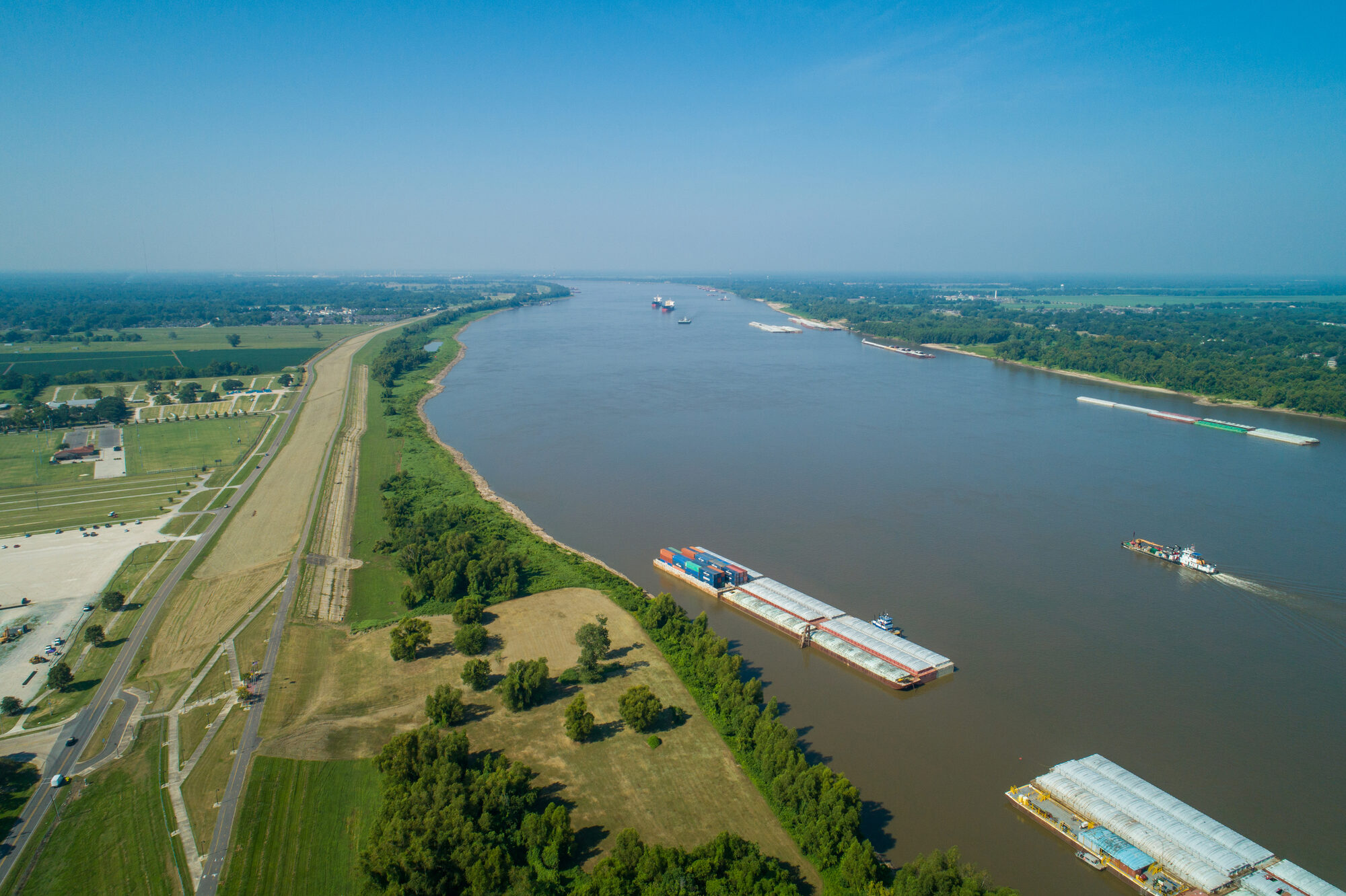
The diary runs from 1753 to 2023. For roughly the first century the signal looks natural. From about 1850 it begins to shift, and the change speeds up after the 1960s, when synthetic fertiliser use across the Mississippi basin took off. Modelling of the isotope data suggests the river’s share of the reef’s nitrogen climbed from around 30-50% late in the twentieth century to more than 60% over recent decades, with an estimated peak near 80% in 2023. The basin covers about 41% of the contiguous United States, and the reef lies roughly 448 km (278 miles) from the river mouth.
A DeeperBlue report on the paper and the Max Planck press release both stress the timing: the highest nitrogen values in the whole record fall in 2016 and 2022-2023, the same years as heat waves, bleaching and disease outbreaks on the banks. Senior author Alfredo Martínez-García says the combination of record nutrient loads and extreme heat is decisive for the damage.
Why nutrients make heat harder on corals
Reef-building corals live in partnership with microscopic algae that supply most of their food. Extra nitrogen can upset the balance of that partnership and leave the coral less able to cope when water gets too warm. You do not need the biochemistry to follow the practical point: a reef already under nutrient stress has a thinner margin when a marine heatwave arrives. That is why scientists describe this as a resilience problem rather than a single cause of death.
The authors are careful with cause and effect. The cores show nitrogen and bad years overlapping, and the press release frames heat plus nutrients as the decisive combination. Heat on its own can bleach coral, and the study does not say nitrogen alone killed anything. The headline is that two pressures are stacking, and one of them, river runoff, is something people can change.
How the reef is doing right now
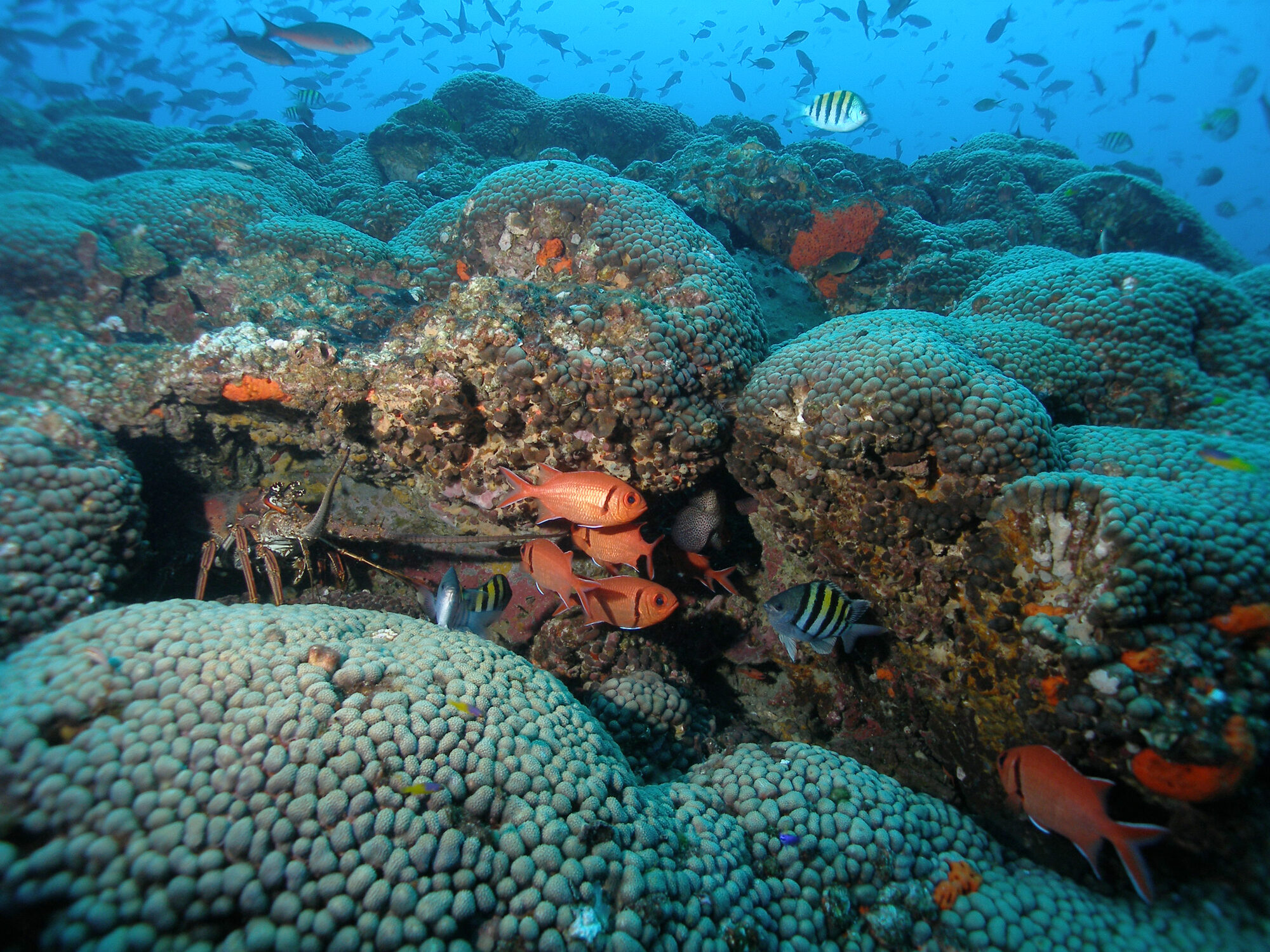
The news is not all bad. NOAA’s long-term monitoring at East and West Flower Garden Banks began in 1989. It recorded mean coral cover of about 55% in 2023 and about 56% in 2024 across the one-hectare study sites, which is very high for the Atlantic region. Cover at West Flower Garden Bank has risen significantly over the monitoring period, while East has held steady.
The heat is the worry. At reef depth in 2023, East Flower Garden Bank spent 53 days above 30°C (86°F), against a local bleaching threshold of 33 days. West spent 31 days over 30°C against a threshold of 22.3 days. By late September 2023, about 28% of coral cover at East was bleached and just over half was pale, while West was at about 6% bleached and 17% pale. In 2024 the reef bleached again, the first time consecutive bleaching years have been recorded there; by late September 2024, 10.3% of coral cover at West was bleached and 46.9% was pale.
| Measure (NOAA monitoring) | East Flower Garden Bank | West Flower Garden Bank |
|---|---|---|
| Days above 30°C at reef depth, 2023 | 53 (threshold 33) | 31 (threshold 22.3) |
| Coral bleached, late Sept 2023 | 28.06% | 5.61% |
| Coral pale, late Sept 2023 | 50.64% | 17.09% |
| Bleached / pale, late Sept 2024 | not reported on the page | 10.3% / 46.9% |
| Trend in coral cover since 1989 | Stable | Significantly up |
What this means if you dive the Gulf
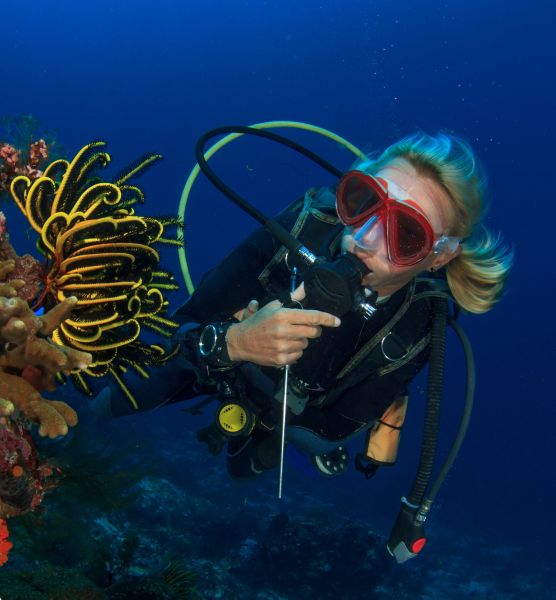
Nothing in the study closes the sanctuary or changes how you plan a trip. It sits roughly 80 to 125 miles off the Texas and Louisiana coast, is managed by NOAA, and is reached by boat, typically on liveaboard or charter trips in the warmer months. Our earlier guide to the sanctuary covers the sites and the August coral spawning. One magazine account of a liveaboard trip reported mid-70s°F (about 24°C) water and visibility from 5 to 60 feet (1.5 to 18 m), so expect variability rather than Caribbean-postcard clarity.

What is worth doing differently is small, and mostly about arriving with good habits and clean gear:
- Book operators who use the sanctuary’s mooring buoys. Anchoring is not permitted inside sanctuary boundaries. Buoys can be removed for maintenance or lost in storms, and missing ones can be reported to [email protected].
- Disinfect your gear before you go. NOAA asks divers to help prevent the spread of stony coral tissue loss disease, which has moved through the Florida reef tract and parts of the Caribbean.
- Dial in buoyancy before the trip, not on it. A weighting check in the pool or on a shore dive is cheap insurance. Our buoyancy tips are a good refresher.
- Keep fins, gauges and cameras off the coral. Stressed coral can be damaged by a single contact. Our piece on being your dive guide’s best buddy covers briefing etiquette.
- Report what you see. Dated photos of pale or bleached coral, with the dive site, are useful if you share them with the operator or sanctuary staff. Our older piece on global coral bleaching explains what to look for.
How to disinfect your dive gear, step by step
NOAA’s Flower Garden Banks guidance on preventing coral disease sorts gear into groups. Use the figures from the sanctuary’s page when you do this, and never pour used solution into the ocean or a storm drain; NOAA says to dispose of it down a sink, tub or shower.
| Gear | NOAA method |
|---|---|
| Weight belts, tools | 10 minutes in a 10% bleach solution (1 quart bleach to 2 gallons water), then fresh-water rinse and air dry |
| Wetsuits, BCDs, masks, fins | 10 minutes in an approved disinfectant such as 0.5% RelyOn or 1% Virkon S, then 10 minutes in fresh water and air dry |
| BCD bladder | About 0.5 litre of solution through the exhaust hose, inflate and rotate, leave 10 minutes, flush twice with fresh water |
| Regulators, computers, gauges, cameras | 20 minutes in warm water with antibacterial dish soap or OdoBan (5 oz per gallon), rinse and air dry; or wipe thoroughly with isopropyl alcohol |
One caution from the page itself: the infographic for sensitive equipment appears to show different concentrations to the text, so check the figures against NOAA’s current page before you mix anything, and check your manufacturer’s guidance for regulators and computers.
What can change on the river side
The nitrogen in the cores reflects decades of farming and drainage across a huge basin. The study’s authors recommend monitoring that can separate natural variability from human-caused change, and the research does not prescribe policy or suggest a quick fix. For a diver, the useful takeaway is that inland water quality is a reef issue even for a sanctuary 80 miles offshore.
Common mistakes divers make around stressed reefs
- Assuming a remote reef is a pristine reef. Distance and cooler water have helped the Flower Garden Banks, but they do not make it immune.
- Skipping disinfection between regions. The sanctuary asks visiting divers to disinfect because pathogens can travel on gear.
- Over-weighting to stay glued to the reef. Heavy weights make it harder to hover and easy to bump the coral. Fix it with a proper weight check.
- Treating bleached coral as dead coral. Bleached coral can recover if conditions improve, which is another reason to stay clear of it.
Frequently asked questions
Is the Flower Garden Banks still worth diving?
NOAA’s monitoring shows mean coral cover around 56% in 2024, which is high for the region, and the sanctuary remains a draw for large coral heads and pelagic visitors. It has been through consecutive bleaching years, so ask your operator for recent conditions.
Did the study prove fertiliser caused the bleaching?
No. It shows the highest nitrogen input in 270 years coincided with the worst heat, bleaching and disease years, and the authors say heat plus nutrients is the decisive combination. Heat alone can cause bleaching.
How far is the reef from the Mississippi?
About 448 km (278 miles) from the river mouth, according to the Max Planck Institute for Chemistry.
Do I need to disinfect my gear for this reef?
NOAA asks divers to disinfect gear before visiting to help prevent the spread of stony coral tissue loss disease. Follow the sanctuary’s current instructions.
Sources: Max Planck Institute for Chemistry press release (mpic.de); study DOI 10.1126/sciadv.aef2841; NOAA 2023 and 2024 monitoring reports; NOAA coral disease prevention and sanctuary home page; Courthouse News; DeeperBlue; Scuba Diving magazine.