
Aug 17

Gear Care 101

By Graeme Contributor

Graeme is an experienced and well trained diver, with PADI Divemaster and Master Scuba Diver status in addition to CAUS Scientific Diver Lv.2 and being a Canadian standards (CSA Z275.4-02 and CSA Z275.5-05) trained commercial scuba and surface supply diver. Currently employed as a commercial diver in the interior of British Columbia, he is always looking to improve his skills, gain new qualifications, and do as much diving as possible!

I know I can't speak for everybody; but I know that at any given point, I can't quickly afford to replace or repair the important parts of my scuba kit. Regulators, BCD, drysuit, wetsuit... all of these are expensive pieces of equipment, so keeping them in best condition is in your best interest as a diver. A lot of people have a lot of ideas of how to best keep and maintain their kit, so the main purpose behind this series of articles is a quick heads up on equipment maintenance for newer divers. Remember: a long service life is a good service life!

Exposure protection equipment is probably the easiest to maintain and most likely to be abused piece of equipment a diver owns. Wetsuit or drysuit, a little care and attention can extend the service life of these items long past most imagined due dates. After a dive, rinse the suit completely with fresh water. Wetsuits need both inside and outside rinsed thoroughly. Drysuits only need a internal rinse after heavy (and sweaty usage) or after a bad leak. Cuts and tears should be dealt with quickly, preferably with neoprene cement (as appropriate) and patching material. Metal drysuit zippers should be waxed/lubricated every few dives, and plastic zippers need it as often as the manufacturer recommends. Drysuit cuffs and neck seals made from latex should be trimmed to your size and can be maintained very easily with baby powder or talc.
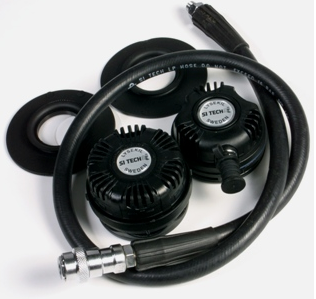

Drysuit valves are enough that they deserve their own paragraph. The inflator and exhaust need special attention after any dive; but particularly after dives in water with severe turbidity, particulate matter or if you experience a silt out. Rinse your inflator valve thoroughly, and check it for "stickiness", you may need to have it checked before your next dive. The exhaust valve needs to be rinsed with running water and should be rotated under the stream to get foreign debris out. If it still makes a gritty sound and has a sandy, gritty feel when you turn it, rinse it more. If the problem persists, check with the manufacturers instructions for taking it apart and cleaning it.

After cleaning your exposure protection, hang it up to dry using a hanger or by draping it over a rail or bar. If your exposure protection is neoprene, never rest it with the zipper down and the suit resting on it. The zipper can cause the neoprene to crush and make a weak spot in your gear. If you have boots attached to you drysuit, you may with to rig a set up to hang it from the boots. Wet or dry though, avoid leaving it in the sun for over long or in a warm, damp environment. Too much direct sunlight can cause degradation in the material and warm, damp environments are a favourite for molds and other less savoury things that you really don't need in your suit!

Next up will be BCD and Regulator care!

Latest entries
Jun 18

Night Diving 101

thumbnail-1

If you have not yet experienced the ocean at night, we highly recommend it.  You can see creatures and behaviors not normally seen during the day.  The whole experience is... Read More

Jun 16

What are the Benefits of Diving?

diver

For some it´s the adrenaline rush of the exploring the deep waters, for others it´s the beauty of the reef and the marine life that inhabits it. There are many... Read More

Jun 15

Who are the Diving Divas

DivingDivas2

Diving is one of the best sports to meet new friends and continue the camaraderie into the future building lasting memories and long-term friendships. You could not find a better... Read More

Jun 13

Dive Safety: Hydration

water-hydration

While you were taking your open water or other course(s), I’m sure the importance of hydration while diving was mentioned. But how much was it stressed? Everyone knows that being... Read More

Jun 12

What is Phytoplankton?

photoplankton

Phytoplankton are microscopic organisms which contain chlorophyll and require sunlight in order to live and grow. Most phytoplankton are buoyant and float in the upper layers of the ocean, where... Read More

Jun 11

Mantis Shrimp battles for it’s life in the arms of a flamboyant cuttlefish!

mantis-fight

The mantis shrimp is one of natures most impressive predators. It can spot and target potential prey using the most sophisticated pair of eyes in the animal kingdom. It can see... Read More

Jun 10

A New Addition to the USS Mohawk

Artwork on Mohawk

Close to this time frame in 2012, the decommissioned Coast Guard Cutter,uniquely built with wooden decks and known as the USS Mohawk, was sunk in 90 feet of water approximately... Read More

Jun 9

Indonesia Shark Petition

thumbnail

Together with the Ministry of Fisheries and Marine Affairs, WWF Indonesia, launched a shark campaign in May! The campaign objective is two-fold: To stop selling of shark products in supermarket... Read More

Jun 7

BARE Adventure Series. Episode 3. Win the Ultimate Adventure

bare

Win the Adventure! Deadline for contest submissions: June 10, 2013 Share your best adventure story to win the same trip shown in BARE The Adventure's "Destination Tahiti" episode: a dream... Read More

Jun 6

Proper Diving Techniques with a Camera in Tow

camera_image

Many people who dive with a camera of any size exit the water totally stressed and complaining about the hassle they’ve had coping with the various challenges of diving with... Read More