
Jul 15

Cold Water Diving pt.3

By Graeme Contributor

Graeme is an experienced and well trained diver, with PADI Divemaster and Master Scuba Diver status in addition to CAUS Scientific Diver Lv.2 and being a Canadian standards (CSA Z275.4-02 and CSA Z275.5-05) trained commercial scuba and surface supply diver. Currently employed as a commercial diver in the interior of British Columbia, he is always looking to improve his skills, gain new qualifications, and do as much diving as possible!

Click here to read pt.1. 
Click here to read pt2.
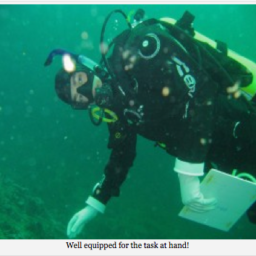
Cold water diving can be some of the most challenging diving you can take part in, whether it's on a recreational, technical or commercial level. Conditions are seldom ideal at the best of times, and can change rapidly with depth and terrain. What was a nice dive at noon can become a night dive if turbidity increases at depth, and going around a corner on a smooth drift can see a new and more energetic current launch you downrange in a sudden and surprising way! It's all about having the right gear for the dives and staying aware of your surroundings, and having a plan for the post dive!
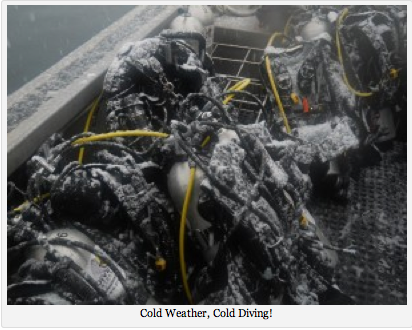
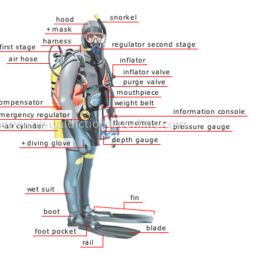
Extra gear that you should have for cold water diving (well, any diving really) is pretty simple stuff. A knife or a pair of shears is important, mostly for awkward encounters with fishing line and net. A backup dive light should be somewhere reachable on your gear, and at least one type of surface signal (whistle or sausage) device incase you get swept out and need to make your presence known! If you have a compass, use it and keep track of where you are in relation to where you need to be. All of these items are relatively low cost compared to the rest of the gear you’ll accumulate for cold water diving, but all play a part in keeping you safe.


As in tropical water, fitness and readiness are important before you hit the water. Before you hit the water, drink at least 500ml of water or a light sports drink. Hydration is just as important in cold water as it is in warm. After the dive is the important part. I can’t speak for everyone, but when I come out of the water in the Pacific Northwest, I am more exhausted and more ravenous than when I come out of the water somewhere warmer, like Bali. This is partly because in addition to burning energy to move around and deal with the rigours of being underwater, you’re also burning a lot of calories to keep warm, even in a drysuit. A warm drink, another 500ml or so of a sports drink and a chocolate bar go a long way at this point to giving you those quick burn calories to get you back on track for the trip home. A toque (or wool knit hat) is great for the trip back on the boat, in all seasons. When you do hit civilization and hot shower/baths/hot tubs, remember that rapid rewarming has been linked as a potential cause of DCI, as your various tissue compartments relax and release nitrogen faster. Try to wait at least an hour or so before you have that long soak!

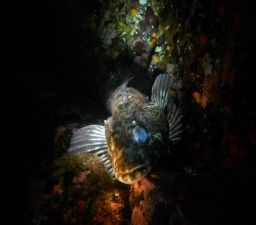
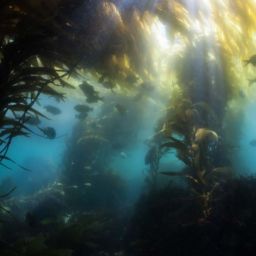
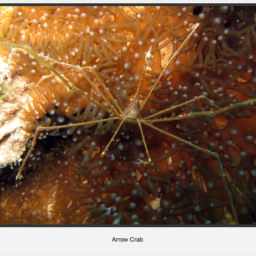
That about sums it up for cold water diving. While more challenging in some ways than warm water diving, it’s definitely overlooked by many because of the automatic association scuba diving has with the tropics. While darker, colder and far more covetous of its secrets, cold waters hold a lot of amazing life, incredibly well preserved wrecks and amazing sights that you’d never expect there! Now if only vis weren’t at its best in the middle of the winter…

Latest entries
May 23

Aggressor Fleet and Dancer Fleet Announce STORMCHECK Program

StormCheck Logo 2013

“StormCheck” Program Protects Guests Vacation During Storm Season Aggressor Fleet and Dancer Fleet expect passengers to have a safe and fun dive vacation as they leave their worries at home.... Read More

May 22

Shark Angels 2013 World Oceans Day Auction Launches

Shark Angle

Shark Angels, a U.S. based non-profit, is thrilled to launch their first annual World Oceans Day auction (www.charitybuzz.com/sharkangels) on May 16th via Charity Buzz, one of the world’s leading auction platforms.... Read More

May 22

A Water Wonder:The Bioluminescent Bay

BioBay

A few of the geographical wonders of the world center around water such as the Florida Red Tides, the Columnar Basalt and the Cerrado Protected Areas. Although Bioluminescent Bay, also... Read More

May 21

5 Ways to Celebrate the Coral Triangle Day on June 9

coral_video

To some, June 9 may seem just like any other ordinary day. But to a growing number of people around Asia Pacific, it is that one special day to come... Read More

May 19

The Moray Eel

drawing_eal

The Moray eel is without a doubt one of every diver’s favorite creatures to come across. There are about 100 species of moray eels worldwide and are commonly found in... Read More

May 19

The Secret Behind Creating New Reefs

The USS Vandenberg

There is nothing quite like a wreck dive.  Descending downwards into an enigma of ecosystems, the experience is subliminal. These artificial reefs exist all over the world but little is known... Read More

May 12

Can Electric Reefs be the Solution?

Electric-Reef-Aragonite.jpg

With every season that passes, our enticing coral reefs are suffering from an abundance of carbon dioxide and threats from warmer waters. Man continues to wreak havoc by polluting our... Read More

May 12

Product Review: Aqualung Lotus i3 BCD

Lotus i3

After using a hybrid BCD for years, I decided to give a back inflate a try and opted for the new technology in Aqualung’s Lotus i3. The “deflate in any... Read More

May 9

Beginner Tips: The Importance of Dive Computers

SuuntoD6Ifinal

During your open water certification you were taught how to use dive tables. Who here actually uses them each time they dive? *cue crickets* I realize a few of you... Read More

May 8

Expectations of Raja Ampat

diving in Raja Ampat

It was the renown National Geographic photographer David Doubilet who first bought my attention to Raja Ampat, a secluded corner of Indonesia which boasts a collection of the most bio... Read More